
Facebook Marketplace is one of the most underrated sourcing channels for Australian resellers.
Most people use it reactively.
They search for terms like “Nike jacket”, “Nintendo DS”, “bulk clothes”, “video games”, “garage cleanout” or “sneaker bundle”, then message sellers before someone else gets there first.
That can work.
But there is another way to use Facebook Marketplace that many resellers overlook:
Instead of only chasing listings, you can get sellers to come to you.
One simple tactic is posting a wanted ad saying you buy used clothing, sneakers, video games, consoles or other stock you know how to resell. Done well, this turns Marketplace into a lead source instead of just a search feed.
That does not mean every message will be a good deal.
It means you can create more chances to find stock, then use filters, questions and pricing discipline to decide what is worth buying.
Why Facebook Marketplace works for sourcing
Facebook Marketplace works because it sits between three types of sellers.
Some sellers are trying to get top dollar.
Some sellers just want items gone.
Some sellers do not want to photograph, list, measure, answer questions, post, pack or negotiate every item individually.
That third group is where resellers can find opportunity.
If someone has bags of clothes, a box of old games, kids’ shoes, wardrobe cleanouts, garage stock or unused hobby gear, they may prefer a simple bundle sale and quick pickup.
For a reseller, convenience is the value you provide.
You are not paying full resale value. You are paying for the bundle, the risk, the sorting work, the cleaning, the photographing, the listing, the storage, the postage and the chance that some items will not sell.
That is why your buying price needs to leave room for profit.
Why a wanted ad can work
Most sourcing is reactive.
You wait for someone else to list an item, then you compete with every other buyer watching the same keywords.
A wanted ad flips the process.
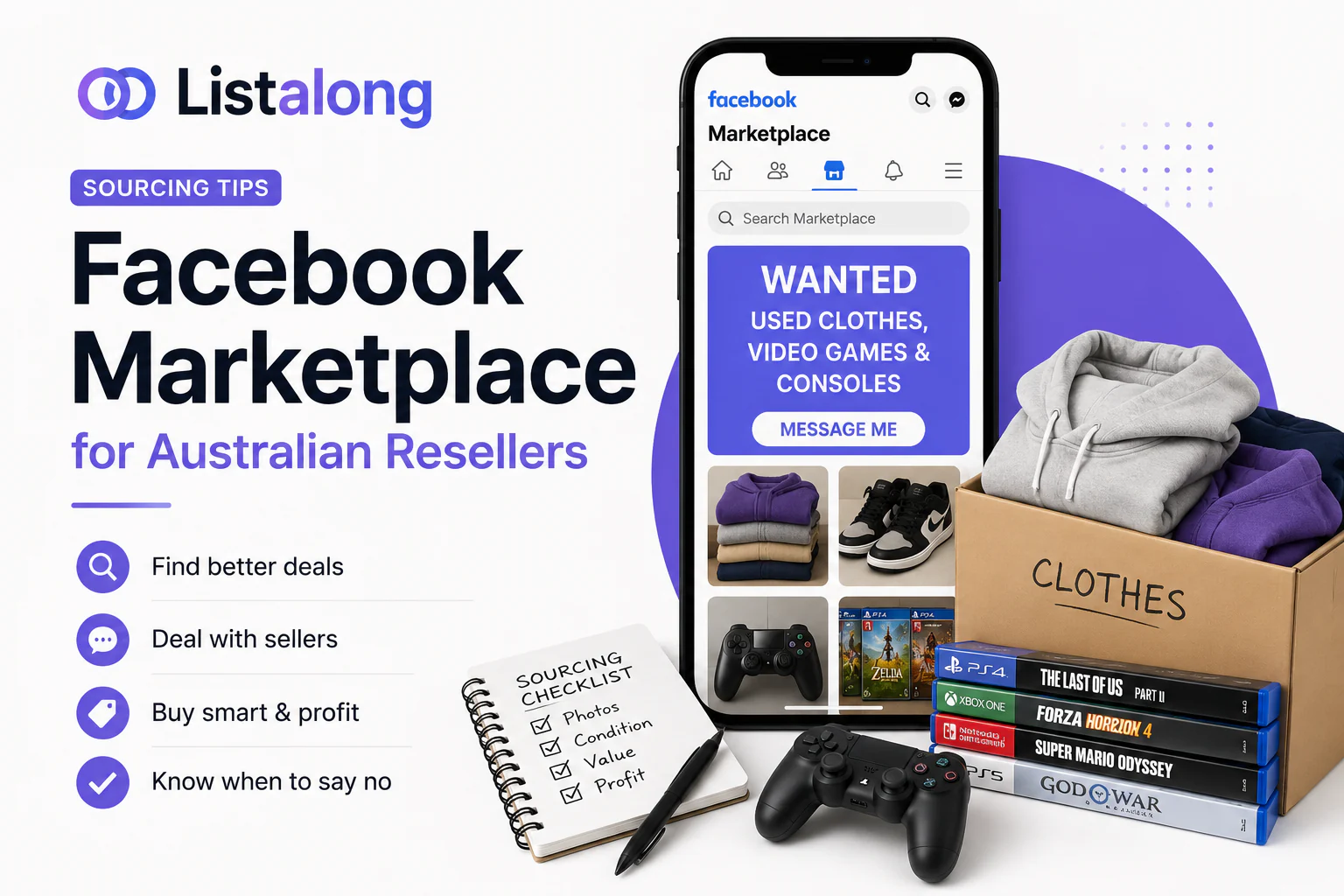
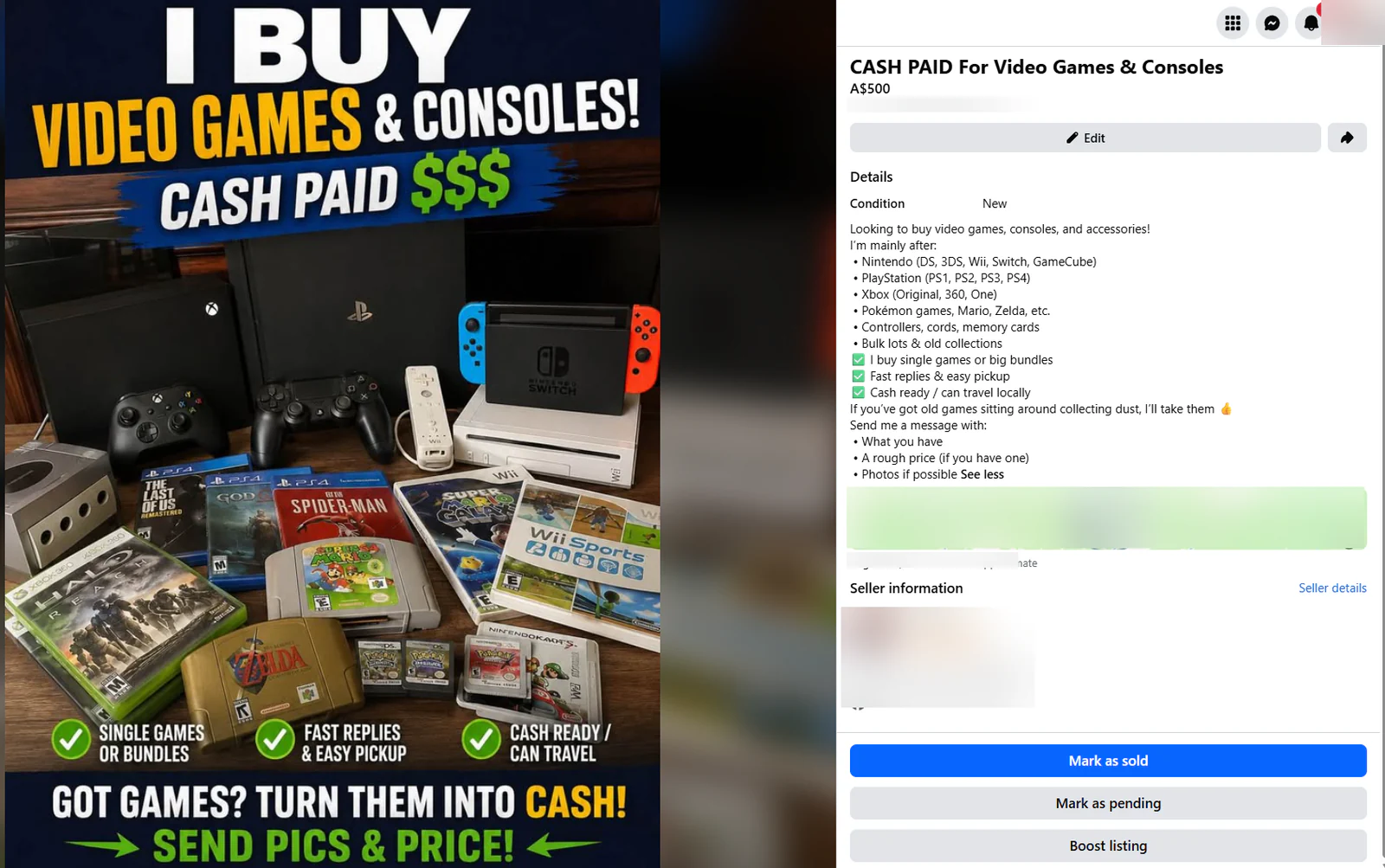
Instead of searching all day, you create a post that tells people exactly what you buy.
For example:
I buy bulk used clothing, sneakers, video games and consoles. Happy to look at wardrobe cleanouts, garage cleanouts and unwanted collections. Send photos and your suburb.
That kind of post does a few useful things.
It attracts people who were already thinking about clearing things out.
It gives them an easy first step.
It also lets you set the rules early: photos first, suburb first, no obligation to buy.
This matters because Facebook Marketplace can create a lot of low-quality leads. A clear post helps filter people before you spend time driving around.
Best items to source from Facebook Marketplace
For Australian resellers, the best Facebook Marketplace sourcing categories are usually items that are easy for the seller to bundle, but still valuable enough for you to resell individually.
Good categories include:
- branded clothing
- sneakers and boots
- vintage or streetwear pieces
- video games
- older consoles
- gaming accessories
- Pokemon cards and collectibles
- DVD box sets in bulk
- sports jerseys
- workwear and outdoor brands
- kids’ branded clothing bundles
- garage cleanout lots
Video games can work especially well because people often sell them in groups. A seller may not want to research every title, controller, cable or console variation. That gives you room to buy the lot, test it, separate it and sell the better pieces individually.
Clothing can also work, but it needs more discipline.
A bag of clothes can look exciting, but low-value brands, stains, missing size tags, fake items, heavy storage volume and slow sell-through can quickly turn a cheap buy into dead stock.
The biggest mistake: buying too much average stock
The hardest part of Facebook Marketplace sourcing is not finding people who want to sell.
It is saying no.
When you post a wanted ad, people may send almost anything: bags of fast fashion, damaged shoes, old DVDs, games with no discs, fake designer items, random electronics, clothes that smell like smoke, or boxes of items they believe are “worth heaps” because they saw one high asking price online.
You need to politely reject most of it.
That can feel awkward at first, but it is part of reselling.
A reseller does not make money by buying everything.
A reseller makes money by buying selectively.
The best mindset is:
You are not looking for cheap items. You are looking for profitable items.
There is a big difference.
A $10 bag of clothing can still be a bad buy if nothing is worth listing.
A $150 video game bundle can be a great buy if it contains strong titles, working consoles and accessories with proven sold prices.
How to write a Facebook Marketplace wanted ad
Your ad should be simple, specific and local.
Do not make it sound too corporate. People often respond better when it feels like a normal local buyer.
Here is a simple version:
Wanted: Used Clothes, Sneakers, Video Games & Consoles

I buy used clothes, sneakers, video games, consoles and accessories.

Happy to look at wardrobe cleanouts, garage cleanouts, bulk clothing bags,
old game collections and unwanted items.

Mainly looking for:
- branded clothing
- men's and women's fashion
- sneakers and boots
- Nintendo, PlayStation and Xbox games
- older consoles and controllers

Please send:
- photos of what you have
- your suburb
- a rough price you had in mind

I may not be able to buy everything, but I am happy to take a look.
That last line matters.
“I may not be able to buy everything” gives you a polite exit before the conversation even starts.
Add filters before you inspect
A good wanted ad should attract leads.
A great wanted ad should filter leads.
Before you agree to inspect or pick up, ask:
- Can you send clear photos?
- What suburb are you in?
- Are you selling as a bundle or individually?
- Are there any stains, holes, smoke smells or major wear?
- Are consoles tested and working?
- Are all games, cases, manuals and discs included?
- Are shoes genuine, and can I see the soles and size tags?
- What price did you have in mind?
You are trying to avoid driving 30 minutes for a bag of unsellable items.
The more you can confirm through Messenger, the better.
A simple reply script
Keep your reply friendly and repeatable.
For mixed lots:
Thanks for messaging. Could you send a few clear photos of everything together, plus any labels, brands or game titles if possible? Also, what suburb are you in and were you hoping to sell it all as one bundle?
For video games:
Are the consoles tested and working? Do they include power cables, controllers and any games? A photo of the game titles would help.
For clothing:
Are there any stains, holes, smoke smells or major wear? Also, are they mostly adult sizes or kids’ sizes?
For shoes:
Could you send photos of the soles, size tags and any wear on the toes or heels?
These questions are not fussy. They save you from bad buys.
How to price bundles quickly
The easiest way to lose money is to price from hope instead of sold data.
Do not price from what people are asking.
Price from what items are actually selling for.
For eBay, use sold listings. For Depop, look at similar items and be conservative. Facebook Marketplace prices can help you understand local demand, but many listings sit unsold, so active asking prices are not proof of value.
A simple reseller pricing rule is:
Expected resale value minus fees, postage issues, cleaning time, testing time, storage risk and dead stock risk equals your maximum buy price.
If a clothing bundle looks like it contains $300 in possible resale value, that does not mean you should pay $200.
You still need to photograph, measure, list, store, answer messages, pack and post every item. Some pieces may never sell. Some may have flaws. Some may be the wrong size, wrong season or wrong style.
For mixed clothing bundles, many resellers need to buy very low unless there are clearly strong brands visible.
For video games, you can often price more confidently because individual titles, consoles and accessories are easier to research.
Red flags when sourcing clothes
Be careful with clothing bundles described only as:
- great brands
- paid heaps
- boutique pieces
- designer style
- vintage
- Y2K
- Depop style
- worth over $1,000
Those words can be useful, but they are not proof of value.
Ask for label photos. Look for brands with actual resale demand. Check condition closely.
Avoid bundles where every photo is blurry, folded inside bags or impossible to identify.
Also be careful with very large hauls. A giant pile may look exciting, but if you do not have space, time or a listing process, it can quickly become clutter.
Your best clothing buys are usually not the biggest bundles. They are the cleanest, most identifiable bundles with brands and styles you already understand.
Red flags when sourcing video games
Video games can be a strong sourcing category, but they have traps.
Watch out for:
- untested consoles
- missing power cables
- missing controllers
- games without discs
- scratched discs
- fake Pokemon games
- reproduction cartridges
- consoles with faulty disc drives
- accounts or digital games being included as “value”
- sellers pricing from the highest eBay listing, not sold prices
Be especially careful with Nintendo handheld games, Pokemon titles and retro cartridges. Fakes and reproductions exist, and some sellers may not know what they have.
Always value physical items you can verify.
Do not pay extra for downloaded games or accounts. They are usually not transferable in a clean, reliable way.
Safety matters
Facebook Marketplace can be useful, but you still need safe habits.
Scamwatch warns that buying and selling scams can involve fake buyers, fake sellers, fake profiles, fake ads, fake reviews and unusual payment requests.
For local sourcing, keep it simple:
- meet during daylight where possible
- tell someone where you are going
- avoid late-night pickups
- do not carry more cash than needed
- check the seller’s profile
- do not click strange courier or payment links
- do not accept screenshots as proof of payment
- trust your gut
Australia Post also maintains scam alerts for fake delivery, payment and parcel messages. If someone sends a link or QR code that claims to be connected to delivery or payment, slow down and check it carefully.
For higher-value buys, take extra care. Most Marketplace transactions are normal, but resellers should build cautious habits early.
Know what Facebook may not allow
If you are posting wanted ads or buying items through Marketplace, make sure your posts stay within Facebook Marketplace rules.
Meta’s Commerce Policies can change, so check the current policy page before posting ads for restricted categories.
As a practical reseller rule:
- stick to genuine physical goods
- avoid counterfeit designer items
- avoid pirated or copied media
- avoid risky medical, supplement or regulated products
- avoid anything you cannot confidently describe and resell
For video games, focus on genuine physical games, consoles and accessories.
For clothing, avoid counterfeit designer items. If you cannot confidently authenticate it, do not build your buying price around it.
How to say no without burning bridges
Saying no is one of the most important Facebook Marketplace sourcing skills.
You do not need to over-explain.
You do not need to argue about value.
You do not need to educate every seller.
Keep it polite and short:
Thanks for sending those through. I will pass on this one, but I appreciate you messaging me.
Or:
Thanks, there are a few good items there, but not quite enough for me to make an offer on the bundle.
Or:
Appreciate the photos. I mainly buy branded items I can resell online, so I will leave this one.
Or:
Thanks, but I would be too far apart on price for this lot.
The goal is to stay friendly.
Someone who sends you a bad bundle today might message you with a great video game lot next month.
When to make an offer
Only make an offer once you understand:
- what is included
- where it is located
- whether it is tested
- whether there are flaws
- whether the seller wants a bundle sale
- what similar items actually sell for
- how much time the lot will take to process
For clothing bundles, price based on the visible good items, not the whole pile.
For video game bundles, price based on tested value and assume unknown issues unless proven otherwise.
For shoes, check soles and condition.
For consoles, assume you may need to clean, test and possibly repair.
A useful offer line is:
Based on what I can see and the work involved sorting, testing and listing it, I would be around $X for the lot.
That explains the offer without sounding insulting.
Build a repeatable sourcing system
If your wanted ad starts working, messages can become messy quickly.
Create saved replies for:
- asking for photos
- asking for suburb
- asking about condition
- making an offer
- politely passing
- arranging pickup
Keep a simple spreadsheet or notes app with:
- seller name
- suburb
- category
- asking price
- offer made
- pickup status
- profit estimate
- items bought
- items listed
- items sold
This helps you understand whether Marketplace sourcing is actually profitable.
It is easy to remember the big wins and forget the bad buys. Track your numbers.
Turn Marketplace buys into eBay and Depop listings
The real profit is not in buying.
It is in getting the items listed.
A common reseller mistake is sourcing faster than they list. Facebook Marketplace can make this worse because bundle buys create piles quickly.
If you buy 60 clothing items but only list five, you have not made money yet.
You have created work.
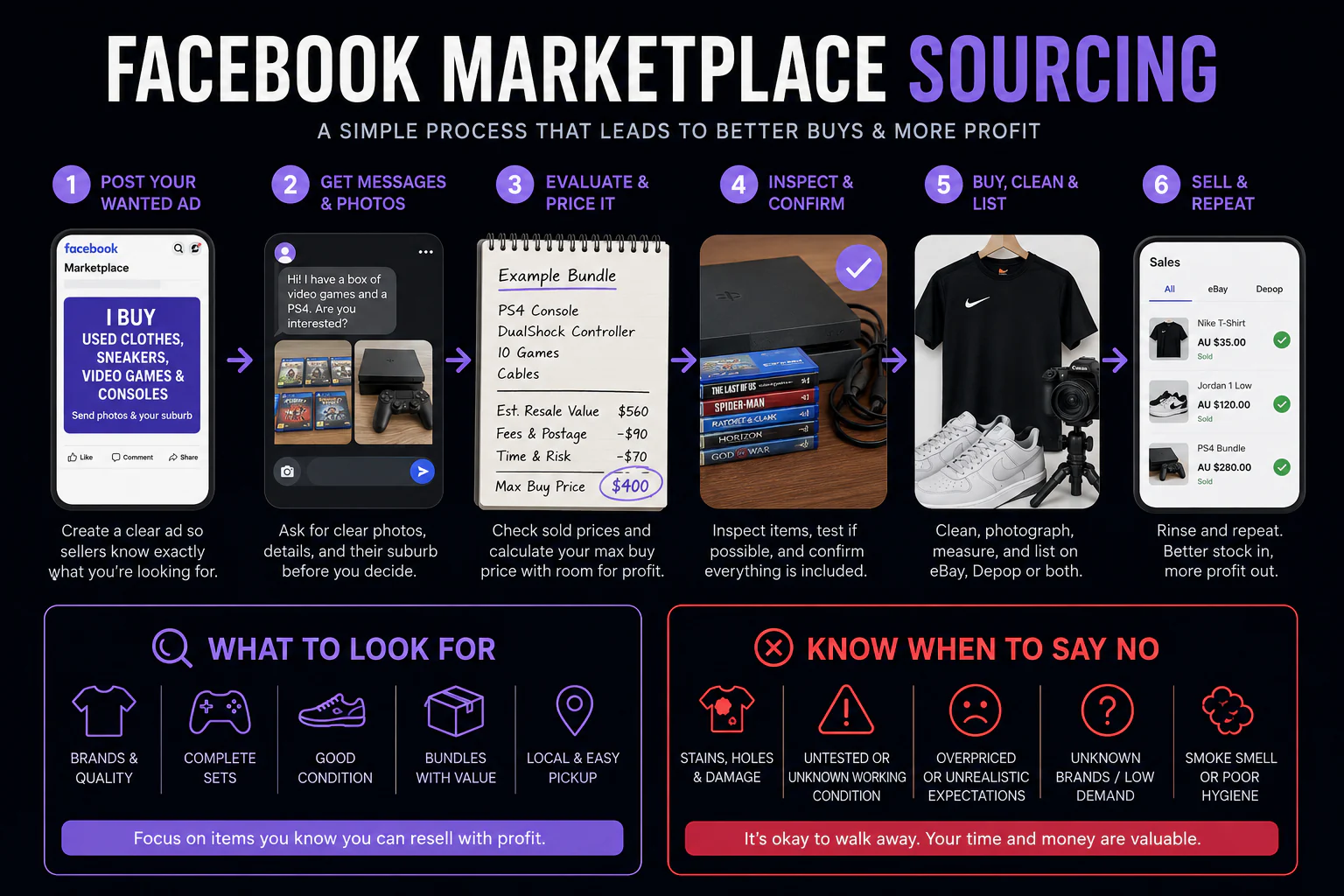
For Australian resellers, a practical flow is:
- Buy selectively.
- Sort and reject bad items.
- Clean or steam clothing.
- Photograph.
- Measure.
- List on eBay.
- Cross-list suitable fashion items to Depop.
- Remove items from the other platform when sold.
Not every item belongs on every platform.
A video game console may be better suited to eBay. A Harley-Davidson shirt, Dr. Martens boots, vintage jacket or branded streetwear piece may also suit Depop.
The key is to avoid doubling the work.
Listalong lets Australian resellers keep listing on eBay or Depop as normal, then cross-list suitable items to the other marketplace automatically or by choosing them. That means you can add a second selling channel without learning a new listing system.
Listalong is available with a 14-day free trial that starts when both eBay and Depop are connected. Create free account; no access code is required.
The best Marketplace sourcing habit
The best habit is simple:
Reply quickly, but buy slowly.
Good deals can move fast, especially video games and branded clothing bundles.
But fast does not mean careless.
Ask for photos. Check sold prices. Confirm condition. Know your maximum buy price. Be ready to walk away.
The more leads your wanted ad creates, the more important this becomes.
You are not trying to buy everything.
You are trying to buy the right things.
Final thoughts
Facebook Marketplace can be a strong sourcing channel for Australian resellers, especially if you stop only searching and start posting wanted ads.
A simple post saying you buy used clothes, sneakers, video games and consoles can bring sellers directly to you.
That is powerful, but it needs discipline.
Some people will send great items. Some will send average items. Some will overprice everything. Some will expect you to buy an entire pile because they believe it is worth heaps.
Your job is to stay polite, ask the right questions, check the numbers and say no when the deal does not work.
The best resellers are not the ones who find the most stock.
They are the ones who buy stock they can actually list, sell and profit from.