
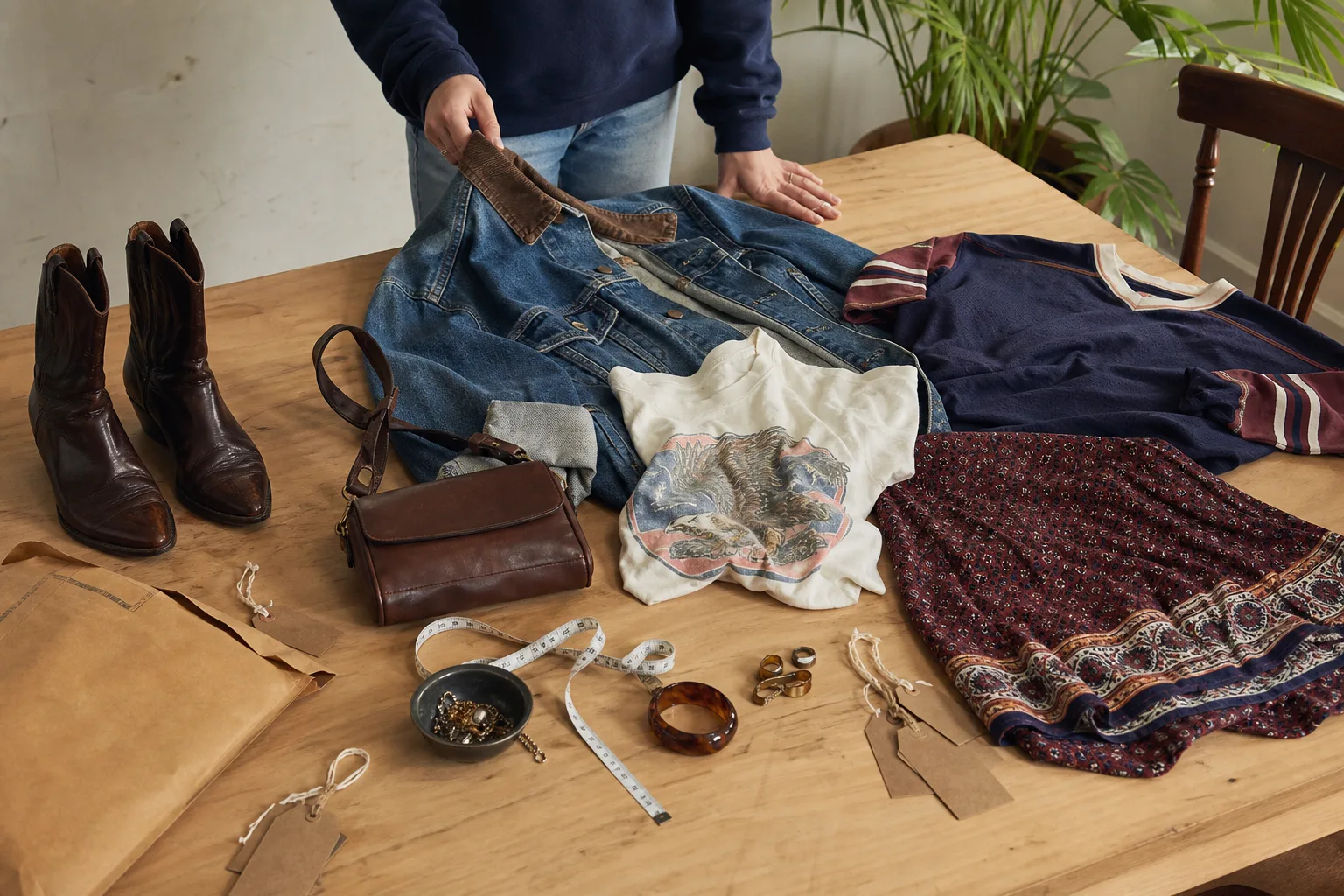
Search for what sells best on Depop and you will find plenty of confident lists.
The problem is that most of them leave out three useful details: the country, the date and the evidence.
Depop does not publish a live Australia-only bestseller chart. Its search and recommendations are also personalised, so two buyers can see different items based on their location, sizes and shopping habits. That makes any claim that one brand or aesthetic always sells fast hard to trust.
There are still sensible places to start.
Depop’s official 2026 trend report points to stronger interest in intentional wardrobe staples, mixed-era nostalgia, dressed-up statement pieces and reworked sportswear. For an Australian reseller, the practical move is to use those signals as a shortlist, then test them against local season, postage, condition and real sold-price evidence.
What is selling on Depop in 2026?
Depop’s global 2026 Trends Report groups current interest into four broad themes:
- Modern Uniforms: dependable pieces such as workwear jackets, peacoats, office shirts, sharp tailoring and boxy knits
- Neo Nostalgia: mixed influences from the 1970s, 1990s and early 2000s, including archival and era-specific pieces
- Everyday Ceremony: structured blazers, draped skirts, kitten heels, metallic fabrics and statement jewellery
- Romanticised Sports: vintage jerseys, tennis-inspired clothing, ski layers and athletic pieces styled outside the gym
That report uses global Depop search, sales and cultural data. It is useful evidence, but it is not an Australian sales guarantee.
Our seasons are different from those in the US and UK, our postage costs affect lower-value items, and local buyers may recognise a different mix of brands. A wool peacoat can be timely in an Adelaide winter while the same item may be harder to move during a Brisbane spring.
Treat trends as clues about how buyers describe and style clothes. Do not buy a rail of stock because a report mentioned one silhouette.
Seven types of stock worth testing on Depop Australia
1. Workwear, denim and useful jackets
Workwear jackets, chore coats, denim jackets and sturdy overshirts fit the current move towards repeatable wardrobe staples. They also give a listing useful details to work with: fabric, wash, pocket layout, fit and construction.
Look for:
- a recognisable cut or practical detail
- good fabric with life left in it
- an attractive fade or patina rather than serious damage
- complete buttons, zips and pockets
- measurements that make the fit clear
A faded jacket is not automatically valuable. It still needs a good shape, wearable condition and a price that makes sense next to comparable sales.
2. Vintage and era-specific pieces
Depop is well suited to clothes that express a particular era or subculture. Vintage graphic tees, 1990s denim, early-2000s dresses, bandage silhouettes and unusual archival pieces can all give a buyer a clear reason to stop scrolling.
Accuracy matters here. Do not use “vintage”, “Y2K” or an invented decade as decoration.
If you know the likely era, explain why. Show the tag, fabric label, construction, print and condition. If you are uncertain, describe the observable style instead:
Early-2000s-style fitted midi dress with asymmetric ruching and a square neckline.That is more useful than pretending the dress has a history you cannot verify.
3. Retro sportswear and jerseys
Vintage jerseys, older athletic tops, track jackets and sport-inspired layers are worth testing, especially when they have an identifiable era, team, event, cut or colour combination.
Check authenticity carefully. Counterfeit sportswear can look convincing, and a familiar badge does not prove an item is genuine. Photograph labels, stitching, sponsor details and flaws rather than relying on one front-facing image.
Also consider timing. Interest around a tournament or local sporting season can help, but it does not rescue an overpriced or questionable item.
4. Distinctive dresses, skirts and going-out pieces
Depop’s current trend data includes more dressed-up pieces: draped skirts, metallic fabrics, kitten heels and statement details. These can work because the buyer can picture a complete outfit or occasion.
Useful listing details include:
- neckline and sleeve shape
- fabric and whether it stretches
- lining and closure
- waist, bust, hip and length measurements
- whether the fabric is sheer
- visible wear around hems, straps and fastenings
An ordinary dress with a vague description is easy to ignore. A distinctive dress with a clear fit, honest condition notes and strong photos gives the buyer something concrete to assess.
5. Boots and recognisable footwear shapes
Western boots, knee-high boots, loafers, platform shoes, retro sneakers and other strong silhouettes can translate well to Depop.
Footwear needs more condition evidence than many clothing listings provide. Show the soles, heels, toe boxes, insoles, size markings and any cracking or separation. Measure the insole or outsole when the labelled size may not tell the whole story.
Heavy boots can also be expensive to send within Australia. Pack and weigh them before deciding what you can afford to charge.
6. Bags and statement accessories
Shoulder bags, practical leather bags, belts, sunglasses and jewellery can be useful lower-storage stock. They also fit Depop’s emphasis on personal styling without requiring a buyer to match a garment size.
Small does not always mean cheap to post, and familiar designs can attract counterfeits. Check hardware, lining, labels, wear points and authenticity before listing.
For jewellery, describe materials only when you know what they are. “Gold-tone” is more honest than “gold” if there is no hallmark or test to support the claim.
7. Good branded basics—with a reason to buy
Branded basics can sell, but the brand name cannot do all the work.
A plain shirt may still be worth listing if it has a strong cut, desirable fabric, popular size, excellent condition or sensible price. A cashmere knit, heavyweight tee or well-cut button-down gives you more to explain than a worn basic that will cost nearly as much to post as it does to buy.
The useful question is not “Is this brand popular?” It is:
Why would a buyer choose this exact item over the other listings from the same brand?
A practical Depop stock scorecard
Before cross-listing an eBay item or buying new stock, score it against these six checks.
| Check | A stronger Depop candidate | A weaker Depop candidate |
|---|---|---|
| Platform fit | Allowed fashion, footwear or accessory with a clear audience | Restricted item or miscellaneous stock with no fashion connection |
| Visual interest | Recognisable silhouette, texture, print, era or styling detail | Generic item that looks like hundreds of others |
| Search language | You can name the item, brand, colour, style, fabric and fit accurately | The only description available is “cute top” |
| Condition | Wear is minor, disclosed and easy to show | Damage is hard to explain or affects use |
| Margin | Price leaves room for processing, packaging, postage and stock cost | Postage and work absorb most of the sale |
| Practicality | Easy to measure, photograph, store and send | Bulky, fragile or difficult to keep organised across platforms |
An item does not need a perfect score. It does need a clear reason to list.
If you are unsure whether the category is allowed, check our separate guide to what you can and cannot sell on Depop in Australia before spending time on the listing.
What tends to struggle on Depop?
Some items are allowed but still poor uses of a small reseller’s time.
Be cautious with:
- generic low-value basics where postage feels high next to the item price
- heavily worn clothes without collector, repair or styling appeal
- items that need long explanations but still look unclear in photos
- ordinary fast-fashion pieces priced close to their original retail cost
- bulky jackets or shoes that have not been packed and weighed
- stock bought only because a broad aesthetic is trending
- listings with no measurements, weak lighting or hidden flaws
This is not a judgement on the clothes. It is a question of whether the item gives the buyer enough value and gives you enough margin.
If suitable items are already live but attracting little attention, work through the 12-point Depop slow-sales checklist before assuming the entire category is wrong.
Prohibited stock is a separate issue. Most powered electronics, fakes, used cosmetics, mystery items and other restricted goods should not be listed at all, even if they sell well somewhere else.
Do certain brands sell best on Depop?
Brand is one search signal, not a guarantee.
Depop says relevance has the biggest influence on search ranking. Its system can match a buyer’s words with the listing description, brand, category and colour, while also considering popularity, location, shopping habits and other factors.
That explains why a recognisable brand can help: buyers know what to type. But an inaccurate brand field, irrelevant name-dropping or keyword stuffing can hurt the listing rather than help it.
When assessing a brand, narrow the evidence down:
- Search the exact garment type and style, not just the label.
- Compare the same size range and a similar condition.
- Check recent sold evidence where the platform makes it available.
- Note whether the selling price included postage.
- Ignore one unusually high result until you can explain it.
An unbranded vintage jacket with a strong cut may be more interesting on Depop than a common branded tee. The item still has to earn its place.
Use buyer language, not trend soup
Once you have chosen the stock, describe what is actually in front of you.
Depop recommends clear, accurate descriptions, complete item details and photos that show flaws. Its search guidance warns that irrelevant information can harm exposure.
A useful title might be:
Vintage-style faded denim chore jacket, brown cord collar, size MA weak title might be:
RARE Y2K VINTAGE COASTAL COWGIRL GORPCORE JACKETThe second version tries to catch every trend and tells the buyer less.
Use our free Depop description builder to turn the facts—item type, brand, colour, fit, measurements and condition—into a readable draft. Review every word before publishing.
Price from evidence, not wishful listings
Active listings show what sellers are asking. They do not prove buyers paid that price.
Start with recent comparable sales from eBay or other evidence you can inspect, then adjust for the different Depop audience. Compare the exact item type, style, condition and size where possible.
From 22 July 2026, Depop has announced that the old selling fee will be removed for eligible Australian AUD sales. Australian sellers will still need to allow for payment processing, optional boosting, packaging, postage and their original stock cost. Buyers may also see a separate marketplace fee at checkout.
For example, the announced processing rate of 2.6% + $0.30 would be about $1.62 on a $40 item with $10.95 charged for shipping, before any optional boost or other costs. That does not mean every $40 item is profitable.
Use the eBay vs Depop fee calculator with your actual sale price, postage and stock cost. For a deeper process, read how to price second-hand clothes.
Australian timing still matters
Global trend reports often speak from a northern-hemisphere calendar. Your stock lives in Australia.
Before listing, ask:
- Is this useful in the buyer’s weather now?
- Is a festival, formal, holiday or sporting season approaching?
- Can the item reach the buyer before the likely occasion?
- Will an off-season price cover the space it occupies for another six months?
You do not need to hide every coat in summer. Buyers travel and shop ahead. But the season should influence your expectations, photos and price-review timing.
Test 10 to 20 items before buying more stock
The best answer for your shop will come from a controlled test.
Choose 10 to 20 allowed items from stock you already own. Include a few different categories, but keep the quality of the photos and descriptions consistent. Record:
- listing date
- item category and style
- price and postage charged
- views, likes, messages and offers
- final sale price
- time to sale
- payment, postage and stock costs
Review the batch after 30 days. A listing with likes but no offers may have a price or postage problem. A listing with no attention may have weak demand, the wrong words or an unhelpful first photo. One quick sale is encouraging, but it is not enough evidence to buy ten more.
If the same physical item is also on eBay, give it one stock number and remove the other listing as soon as it sells. Our guide to starting on Depop after eBay walks through that first-batch process.
A short sourcing checklist
Before buying an item specifically for Depop, check:
- It is allowed under Depop’s current policies.
- You can describe the item without inventing an era or aesthetic.
- The condition is good enough for the likely price.
- The size label and measurements are usable.
- You have checked seams, fastenings, soles, lining and high-wear areas.
- Comparable sales support the price—not just active listings.
- You know the packed weight and likely Australian postage cost.
- The expected proceeds leave enough room for your time and stock cost.
- You have a storage location and stock number ready.
If several of those answers are “not sure”, leave the item behind or research it before buying.
Final verdict
The best Depop stock is not one magic brand or one permanent aesthetic.
It is an allowed, appealing item that a particular buyer can find, understand, afford and trust.
In Australia in 2026, workwear and tailored staples, mixed-era vintage, retro sportswear, distinctive dresses, boots, bags and statement accessories are sensible categories to test. Then let your own sales data narrow the list.
Start with stock you already have. Describe it accurately. Price it from evidence. Count postage. Keep the test small enough to learn from.
That approach is slower than copying a viral bestseller list, but it is much less likely to leave you with a room full of someone else’s trend.
Sources and methodology
This guide was checked on 21 July 2026. Depop’s trend report is global rather than Australia-only, so the categories above are presented as testing ideas, not local sales guarantees.