
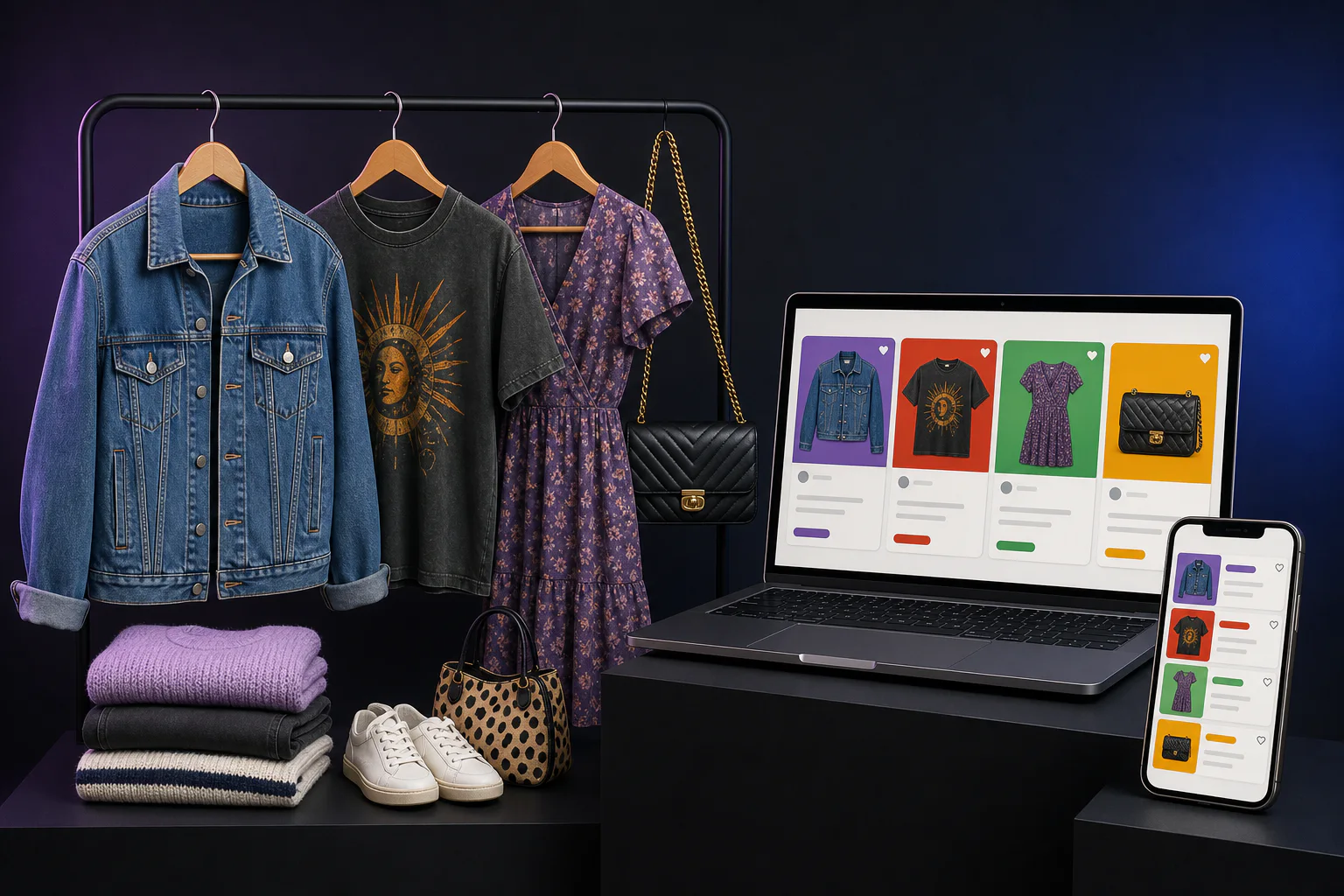
Selling clothes online is easy to start, but choosing the right marketplace is less obvious.
Should you use eBay because it has a broad audience? Depop because it focuses on fashion? Newly launched Vinted for a personal wardrobe clear-out? Facebook Marketplace to find a local buyer? Or should you list the same item in more than one place?
For most Australian sellers, there is no single marketplace that is best for every item.
eBay is usually the strongest all-round option for recognised brands and products that buyers search for directly. Depop is better suited to vintage, Y2K, streetwear and ongoing fashion resale. Vinted can be a simple, low-fee option for selling your own unwanted clothes, but its ordinary Australian accounts are not intended for commercial resellers. Facebook Marketplace can work well for low-value bundles and local pickup.
This guide compares the main options, explains how much extra opportunity cross-listing may create and shows why beginners are usually better off mastering one marketplace before adding another.
Written by Nathan, an Australian reseller and the founder of Listalong. This guide is based on the practical differences between listing, posting and managing second-hand stock across Australian marketplaces. Marketplace terms and fees were most recently checked on 21 July 2026.
Quick comparison: where should you sell clothes?
| Platform | Best for | Buyer style | Work involved | Good first platform? |
|---|---|---|---|---|
| eBay | Recognised brands and general clothing | Broad and search-driven | Moderate | Yes |
| Depop | Vintage, Y2K, streetwear and trend-led pieces | Fashion-focused and visual | Moderate | Yes, for suitable stock |
| Vinted | Personal wardrobe clear-outs and everyday bundles | Value-focused and broad | Low to moderate | Yes, for private selling |
| Facebook Marketplace | Bundles, low-value clothes and local pickup | Local and deal-focused | Moderate | Sometimes |
| Etsy | Genuine vintage clothing at least 20 years old | Vintage and handmade shoppers | Moderate | Only for qualifying stock |
| Grailed | Designer menswear and streetwear | Specialist fashion buyers | Moderate | Usually later |
| Vestiaire Collective | Luxury and designer fashion | Luxury-focused | Higher | Usually later |
| Consignment | Better-quality wardrobes with less seller involvement | The store’s existing audience | Low for the owner | Good for convenience |
The table is a starting point, not a rule. A rare jacket could suit eBay, Depop and Grailed. A bag of children’s basics may be easier to sell as one local Facebook Marketplace bundle. The right choice starts with the item, not the app.
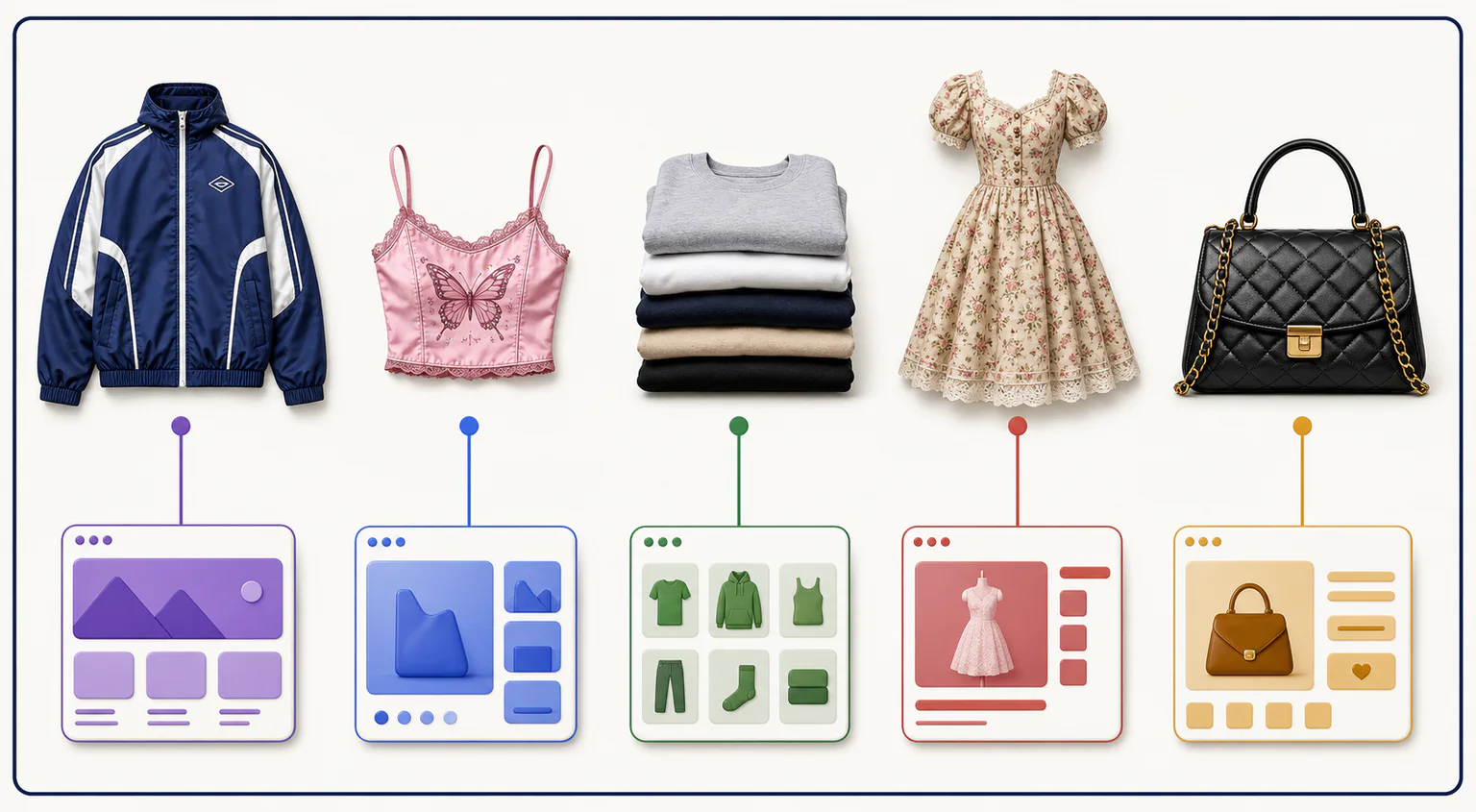
Best platform by clothing type
Before creating an account, ask how a likely buyer would look for the item.
Recognised brands and searchable products
Start with eBay when the label, model, size or product name gives buyers something specific to search for. Branded outdoor jackets, sneakers, sportswear, workwear, occasion dresses and discontinued pieces often fit this pattern.
From a reseller’s perspective, eBay’s biggest advantage is buyer intent. Someone typing a brand, style name and size into search is already looking for that kind of item.
Vintage, Y2K and streetwear
Try Depop when the look matters as much as the label. Distinctive vintage shirts, graphic tees, baggy denim, corset tops, streetwear, festival pieces and trend-led accessories can suit a visual browsing experience.
Strong photos and natural styling matter. A technically complete listing can still feel flat if it does not show the silhouette, texture or details a fashion buyer cares about.
Low-value basics and bundles
Use Facebook Marketplace for clothing that may not justify individual packing and postage. Children’s size bundles, maternity wardrobes, workwear lots and bags of everyday basics can appeal to local buyers looking for value.
Facebook says Marketplace supports local selling and lets sellers indicate meetup preferences such as pickup, drop-off or a public meetup. Agree on the arrangement clearly and follow Facebook’s current safety guidance.
Genuine vintage
Consider Etsy for clothing that really qualifies as vintage. Etsy’s current policy says vintage items must be at least 20 years old. Newer second-hand clothing, vintage-inspired reproductions and ordinary used fast fashion do not qualify just because they look retro.
Etsy can suit buyers searching by era, fabric, pattern or historical style, but sellers need to be confident about age and prepared to document why the item is vintage.
Designer menswear and streetwear
Consider Grailed when the audience is likely to recognise the designer, collaboration or collection. The platform is more specialised than eBay, so ordinary mall-brand clothing may gain little from being listed there.
Grailed’s current terms say sellers pay commission and payment-processing fees. Its audience can be useful for the right piece, but Australian sellers should also account for tracked international postage, longer delivery times and possible buyer customs costs.
Luxury fashion
Consider Vestiaire Collective for authentic higher-value designer clothing, bags, shoes and accessories. The extra process can make more sense when buyer trust and authentication matter enough to justify it.
Before listing, check the current accepted brands, seller fees, shipping process and authentication rules for Australia. A specialist luxury channel is not automatically a better home for every branded item.
Convenience over maximum return
Try a consignment store when you would rather give up part of the sale value than photograph, list, answer messages, pack and post everything yourself.
The store chooses what it accepts and takes an agreed share. That may produce less money than a well-managed direct sale, but it can be a sensible trade when time and cupboard space matter more.
eBay Australia: the strongest all-round starting point
eBay suits sellers with mixed clothing inventory because buyers can search by brand, garment type, size, colour, material and condition. It is especially practical when your stock has clear product information.
It also gives a listing room for measurements, flaws, fabric details and postage choices. That structure is useful for second-hand clothing, where two items with the same label and size can fit very differently.
As of this review, eBay says selling on eBay.com.au is free for eligible Australia-based sellers who:
- do not have a Pro plan
- have AU $25,000 or less in eBay sales over the previous 12 months
- sell to buyers in Australia
Eligible sellers do not pay transaction fees, but optional listing upgrades, international sales and some other costs can still apply. eBay also says its free-selling experience generally requires eligible postage labels to be purchased through eBay. Read the current eBay Australia fee and eligibility rules before setting prices.
The trade-off is detail. Good eBay clothing listings need accurate item specifics, searchable titles, measurements, condition notes and sensible postage. The work pays off when buyers are actively searching, but a generic listing for an unremarkable top can still disappear among thousands of alternatives.
For a closer platform comparison, see our complete eBay versus Depop guide for Australian sellers.
Depop Australia: best for style-led stock
Depop is built around fashion discovery. Buyers can search, but the visual presentation and overall style of the item often carry more weight than they do on a traditional general marketplace.
That makes Depop a natural second channel for:
- vintage and Y2K fashion
- streetwear and graphic tees
- distinctive denim and jackets
- trend-led shoes and accessories
- pieces that photograph well and have a clear aesthetic
Depop is not the best destination for every eBay clothing listing. Plain office basics, weakly photographed low-value pieces and stock with little fashion interest may not receive meaningfully different exposure.
The Australian fee model changes on 22 July 2026. From that date, Depop removes the old 10% selling fee for eligible Australian AUD sales. The Australian Depop Payments processing fee of 2.6% + $0.30 AUD continues, and optional boosting can still cost extra. Buyers may also pay a separate marketplace fee at checkout. See the current Depop seller fee page before setting your price.
Depop is also moving Australian payments fully onto Depop Payments, with PayPal due to stop being available for Australian Depop purchases from 20 July 2026. Sellers should keep their identity and bank details verified and use tracked postage. Depop publishes a separate Australian payout guide.
For a detailed breakdown, read our Depop fees guide for Australian sellers.
Vinted Australia: best for a personal wardrobe clear-out
Vinted launched in Australia on 1 July 2026 with no standard seller fee and integrated buyer-paid Australia Post labels. It also covers more than fashion, including eligible homewares, children’s items, books, electronics and collectables.
The major limitation is easy to miss: Vinted Australia’s individual-user rules prohibit listings intended for commercial selling, and Vinted Pro is not currently available here. That makes it a useful option for selling your own unwanted belongings, but a poor fit for somebody buying inventory to resell or operating an ongoing shop.
Read our guide to whether resellers can sell on Vinted Australia for the commercial-selling rules, or compare the wider platform differences in Depop versus Vinted Australia.
Facebook Marketplace: useful when postage is the problem
Facebook Marketplace can be effective when a low individual sale price makes postage unattractive. A $20 group of children’s clothes may make sense to a buyer ten minutes away even when nobody would pay to ship each piece separately.
It can also suit bulky wardrobe clear-outs and same-size bundles. Buyers can inspect the whole group, ask questions and arrange collection.
The workload is different rather than necessarily lower. Expect messages asking whether the item is available, negotiation, meetup coordination and the occasional buyer who does not arrive. Keep communication clear, choose safe handover arrangements and avoid moving payment or personal information into suspicious channels.
Facebook’s own Marketplace help guidance covers local selling, shipping and safety. Features and checkout options can vary by region, so inspect what is actually available on your Australian account rather than relying on overseas tutorials.
Etsy: only when the clothing genuinely qualifies
Etsy attracts buyers who value vintage, handmade and unusual items. That can make it a good fit for a documented 1980s dress or an authentic 1990s jacket.
It is not a general second-hand clothing marketplace. Etsy says vintage items must be at least 20 years old and may ask sellers how they determined the age. Commercially made newer clothing is not allowed in the vintage category simply because its design looks old.
Etsy also charges listing, transaction and payment-related fees. Its fee policy currently lists a US $0.20 listing fee, with other charges depending on the transaction and seller setup. Review what Etsy allows sellers to list and the current Etsy fees policy before opening a shop.
How much more could you sell on additional platforms?
Putting suitable stock in another marketplace gives more buyers a chance to discover it. The result is not the combined market share of those apps, and it is not possible to promise a fixed sales increase.
The table below is an illustrative planning model for a seller who adds complementary marketplaces and maintains the listings properly.
| Platforms used | Illustrative sales opportunity index | Possible increase |
|---|---|---|
| One well-matched platform | 100 | Baseline |
| Two complementary platforms | 115-125 | 15-25% |
| Three relevant platforms | 118-135 | 18-35% |
| Four relevant platforms | 123-142 | 23-42% |
| Five or more platforms | 125-150 | 25-50% |
The model deliberately shows diminishing returns. Adding Depop to an established eBay store could be meaningful if a large part of the stock is fashion-led. Adding a fifth marketplace that reaches similar buyers may create very little new demand.
A better test is to choose 20 to 50 suitable items, cross-list them for a defined period and record:
- views and enquiries on each platform
- sales and average selling price
- fees and postage differences
- time spent adapting and maintaining listings
- cancellations, returns or stock mistakes
Your own results are more useful than a generic promise about market coverage.
More exposure also creates more work
Every additional marketplace gives an item another chance to be discovered. It also creates another place to manage listings, offers, messages and sold stock.
The workload does not always increase at the same rate as sales.
Moving from one platform to two may provide a meaningful lift because the second platform reaches a different buyer. Moving from four platforms to five may add very few sales while creating another set of listings to maintain.
The main tasks include:
- adjusting listings for different categories and requirements
- responding to offers and buyer questions
- keeping prices and condition details consistent
- checking which items are still available
- removing an item everywhere after it sells
- managing different postage and return processes
In practice, publishing the first duplicate listing is not the hardest part. Keeping every version accurate after prices change or the item sells is where mistakes happen.
Two well-managed marketplaces can be more effective than five neglected ones.
Beginners should start with one marketplace
It is tempting to open accounts everywhere when you first begin selling. Usually, that creates more things to learn at once.
Your first marketplace teaches you the basics:
- taking useful photographs
- writing searchable titles
- describing condition honestly
- comparing completed sales
- packing orders properly
- posting them on time
- handling offers and buyer questions
Get that routine working before copying it somewhere else.
1. Start with one platform
Choose the marketplace that fits most of your current stock. List enough items to understand its forms, buyers and postage process.
2. Add one complementary platform
Choose a marketplace that suits a meaningful part of the inventory rather than one that merely has a large name. For many Australian clothing resellers, that progression is eBay first, followed by suitable fashion stock on Depop.
3. Add a third only when it has a clear job
Grailed might be for specialist designer menswear. Etsy might be for documented vintage. Facebook Marketplace might be reserved for local bundles. Do not add another marketplace simply because software supports it.
What if an item suits both eBay and Depop?
You do not always need to choose one marketplace.
A branded vintage jacket could appeal to someone searching for its exact label and size on eBay, and to someone browsing outfits by style on Depop.
The challenge is managing both versions of the listing. You need to recreate the item for the second marketplace, keep track of where it is available and remove the other listing as soon as it sells.
Listalong is designed for Australian resellers who want to use eBay and Depop without building a complicated multi-platform system. It cross-lists existing listings in either direction automatically, or when sellers choose items themselves.
You keep listing normally on eBay, choose which items also belong on Depop and review the prepared listing before anything goes live. For many small resellers, that focused two-platform workflow is enough.
Listalong is available with a 14-day free trial for Australian sellers, and no access code is required.
Your free trial starts only when both eBay and Depop are connected. Setup time does not count.
You can also read how to sell on eBay and Depop at the same time before deciding whether the workflow suits you.
Frequently asked questions
What is the best place to sell clothes online in Australia?
eBay is the strongest general starting point for recognised brands and searchable products. Depop can be better for vintage, Y2K, streetwear and trend-led stock. Choose according to the item rather than trying to find one app for every type of clothing.
What is the best app for selling second-hand clothes in Australia?
For broad general demand, start with eBay. For style-led fashion, try Depop. Facebook Marketplace can suit bundles and local pickup, while Etsy, Grailed and Vestiaire Collective have narrower eligibility or buyer expectations.
Is it better to sell clothes on eBay or Depop?
eBay usually works better when buyers search for a specific brand, product or size. Depop can work better when the style and visual appeal drive discovery. Some items suit both.
Can I sell the same item on eBay and Depop?
Yes. Keep both listings accurate and remove the other one promptly when the item sells. A manual spreadsheet can work for a small wardrobe; regular sellers may prefer a cross-listing and sold-item sync tool.
Does cross-listing increase sales?
It can increase the number of relevant buyers who see an item, but there is no guaranteed percentage. The benefit is greatest when the second marketplace reaches a genuinely different audience and the stock fits both platforms.
Should a beginner use several marketplaces?
Usually not at first. Learn photography, titles, pricing, packing, postage and buyer communication on one platform. Add one complementary marketplace when that routine feels reliable.
Can I sell ordinary second-hand clothes on Etsy?
Usually no. Etsy says clothing sold as vintage must be at least 20 years old. Newer pre-owned or vintage-style clothing does not qualify merely because it is second-hand.
Final recommendation
For beginners: choose one platform. Use eBay for broad mixed stock or Depop when your wardrobe is strongly fashion-led.
For a personal wardrobe clear-out: consider Vinted when its current private-selling rules fit your items and you want buyer-paid integrated postage.
For fashion sellers: use Depop for vintage, Y2K and streetwear, with eBay as a complementary search-driven channel for recognised brands.
For designer sellers: begin with the broad marketplace where you understand pricing, then test Grailed or Vestiaire Collective when the specialist audience and authentication process suit the value of the item.
For established resellers: measure the contribution of each platform. Keep the channels that generate profitable sales and remove the ones that only generate admin.
The best place to sell clothes online in Australia is the place where the right buyer is likely to look. Start there, build a routine that works, and add another marketplace only when it has a clear purpose.
Official sources checked
- eBay Australia selling fees without a Pro plan
- Depop seller fees and charges
- Depop payouts in Australia
- Vinted Australia launch announcement
- Vinted Australia Catalogue Rules
- Vinted Pro availability
- Vinted Australia shipping
- Facebook Marketplace help
- What sellers can list on Etsy
- Etsy fees and payments policy
- Grailed terms of service