
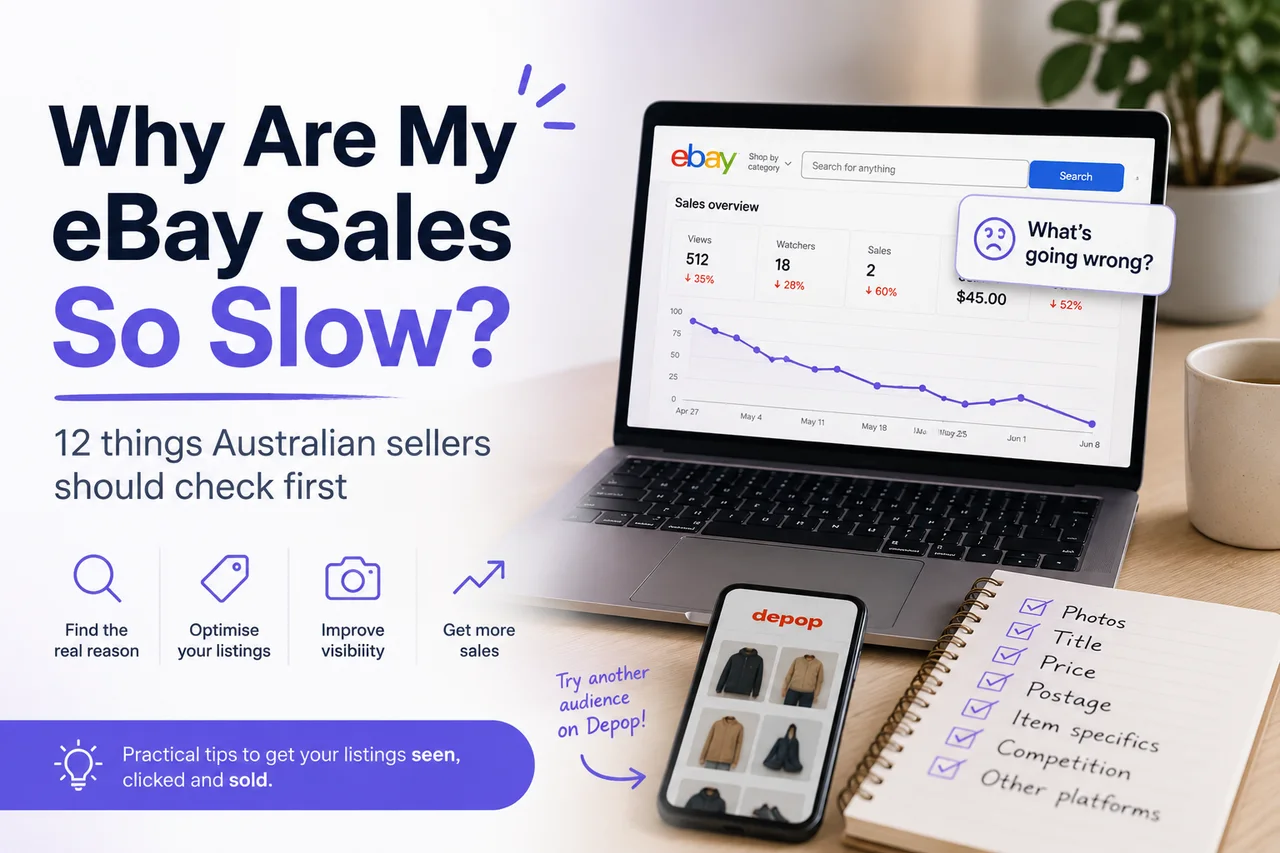
Slow eBay sales are frustrating because there is rarely one obvious reason.
One week you have watchers, offers and quick sales. The next week your listings sit there quietly and it feels like the whole store has disappeared.
The useful answer is this: slow sales are not always an algorithm problem. Sometimes it is demand. Sometimes it is price. Sometimes it is the first photo. Sometimes postage makes the total feel too high. Sometimes your item is fine, but it would perform better in front of a different audience, such as Depop buyers.
This guide walks through the 12 checks Australian eBay sellers should make before panicking, slashing prices or blaming the platform.
Start with the symptom, not the guess
Before changing everything, work out where the problem is happening.
| What you see | What it may mean | What to check first |
|---|---|---|
| Low impressions | Buyers are not seeing the listing. | Title, category, item specifics, demand and promotion. |
| Impressions but no clicks | The listing is appearing, but not earning attention. | Main photo, title, total price and postage. |
| Clicks but no watchers | Buyers are opening it, then losing interest. | Photos, condition, description, flaws and measurements. |
| Watchers but no sale | People are interested, but not ready to pay your price. | Sold comps, offers, postage and competing listings. |
| Lots of questions | The listing is missing information buyers need. | Measurements, material, sizing, flaws and postage details. |
| Store-wide slowdown | It may be an account, seasonality or market issue. | Seller Dashboard, defects, late postage, cases and retail sales periods. |
| Clothing is not moving | The item may need a more style-led audience. | Try Depop as well as eBay before cutting the price too far. |
Make one useful change, then review it
Choose a small batch of comparable listings rather than changing the whole store. Record the date, current item price, postage, impressions, views and sales where those figures are available. Compare equal-length periods and note changes in advertising, stock or seasonal demand.
| Main problem | First action | What to review afterwards |
|---|---|---|
| Very little visibility | Check category, required specifics and relevant title terms | Whether impressions recover |
| Visibility but few visits | Improve the main photo or test a more competitive delivered price | Visits relative to impressions |
| Visits but no purchases | Check condition details, measurements and comparable sold prices | Buyer questions, offers and sales |
| Sales but little profit | Recalculate fees, packaging and postage | Net proceeds after your costs |
These are diagnostic clues, not proof of a single cause. Watchers are not guaranteed buyers, and a handful of views is too little evidence to declare a change successful. Pick a review date suited to how often that kind of item sells; a quiet week for rare stock may tell you very little.
Use the listing optimisation checklist for the actual edits and the sold-listings walkthrough to check your price. If comparable items are not selling either, consider holding, bundling or sourcing less of that stock rather than repeatedly relisting it.
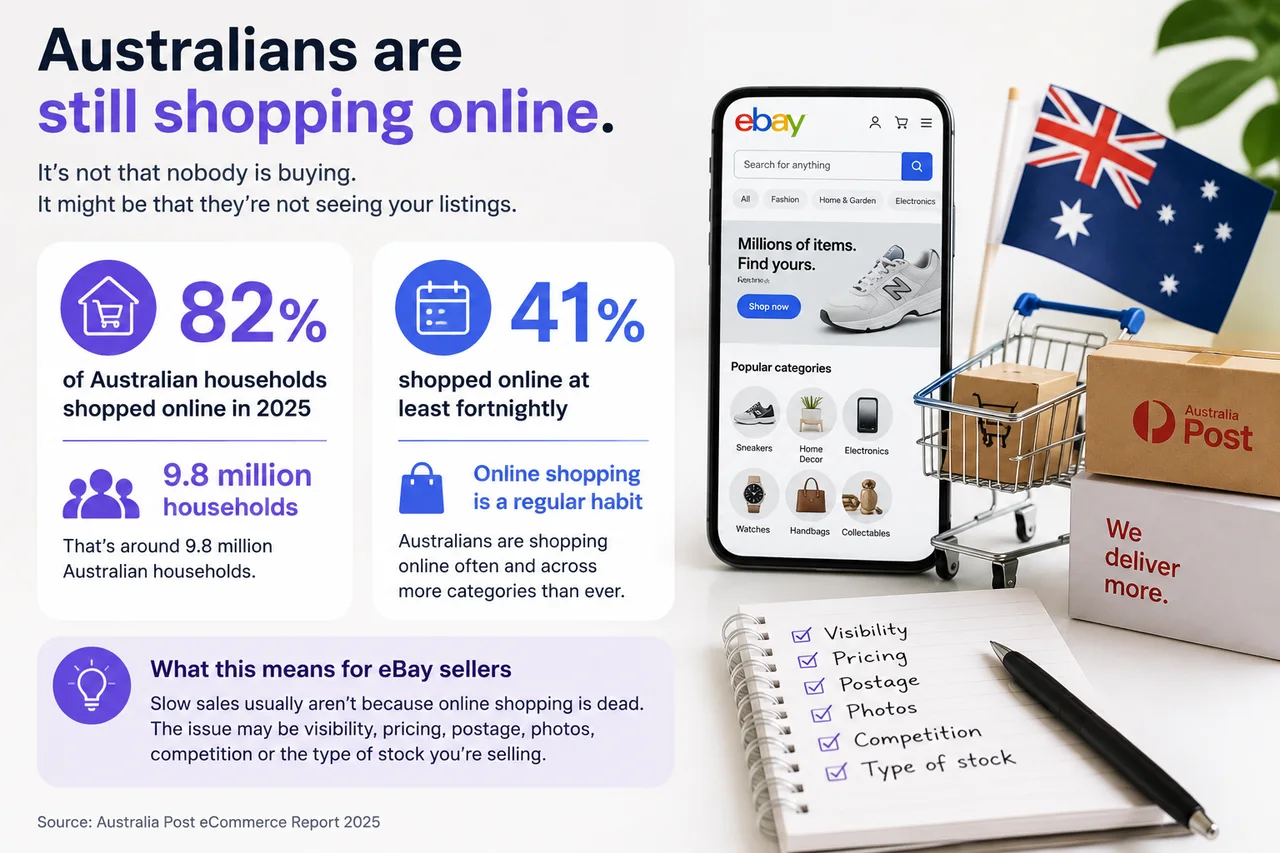
1. Australians are still shopping online
If your sales are slow, it does not automatically mean nobody is buying online.
Australia Post’s 2025 eCommerce report reported that online shopping was still a normal part of Australian household behaviour. The important seller takeaway is not “everything should sell easily”. It is that slow sales usually mean your item is not being found, clicked or chosen.
That is a more useful problem to solve.
Instead of thinking, “eBay is dead”, ask:
- Are buyers seeing my listing?
- Is my title matching buyer searches?
- Does my first photo look clickable?
- Is my total price competitive?
- Does this item suit eBay, Depop, or both?
2. Buyers may be more price-sensitive than you expect
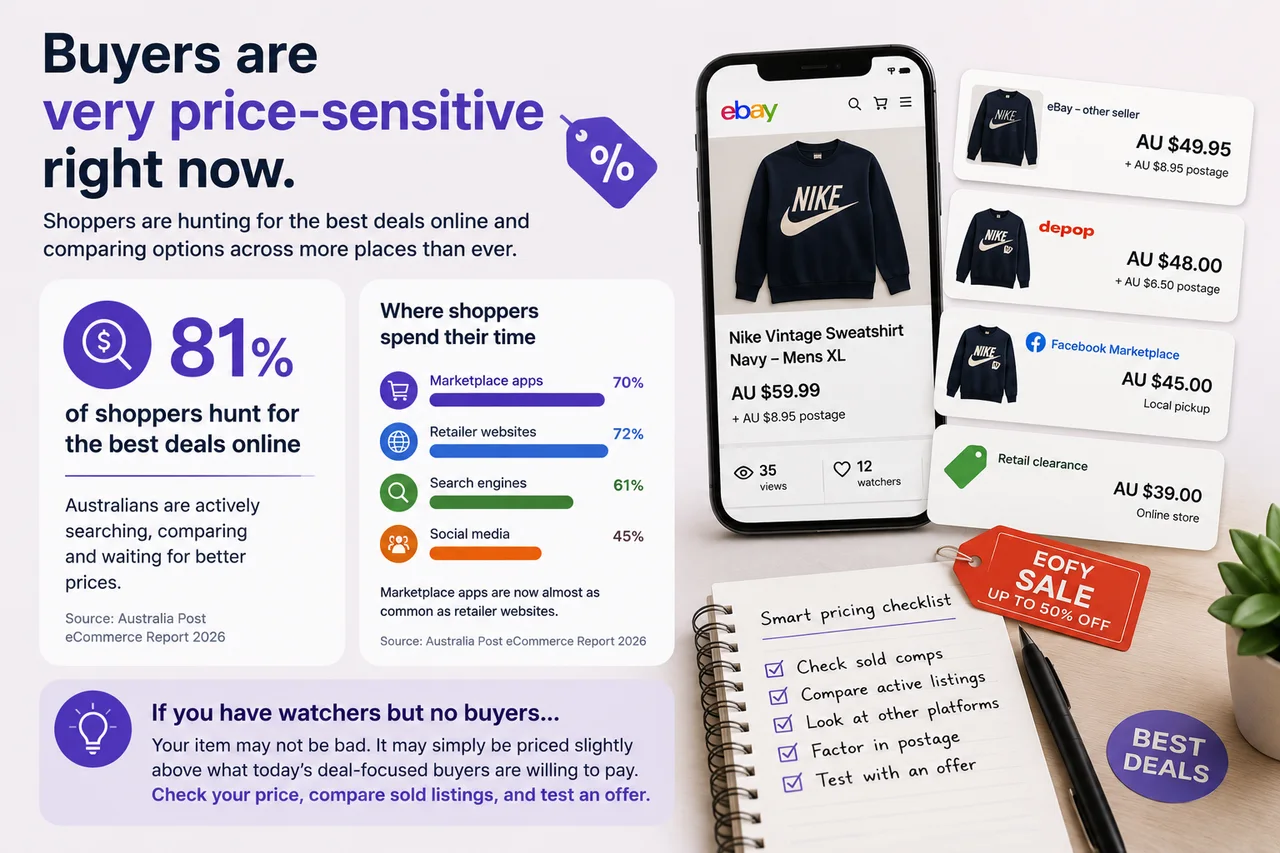
A lot of slow eBay sales are really pricing problems.
That does not mean your item is bad. It may simply be priced slightly above what buyers are willing to pay right now.
This matters because second-hand buyers rarely compare your item in isolation. They may compare it with:
- Recent eBay sold listings
- Other active eBay listings
- Depop listings
- Facebook Marketplace listings
- Retail clearance
- EOFY or Boxing Day sales
- Free-postage options
Australia Post’s 2026 eCommerce report points to shoppers looking hard for value and using different places to shop and compare. For resellers, that means the total buyer cost matters: item price plus postage, not just the item price alone.
If you have watchers but no buyers, check sold comps before you panic. Watchers often mean the item has demand, but the price, postage or timing is not quite right.
3. EOFY and retail sales can distort demand
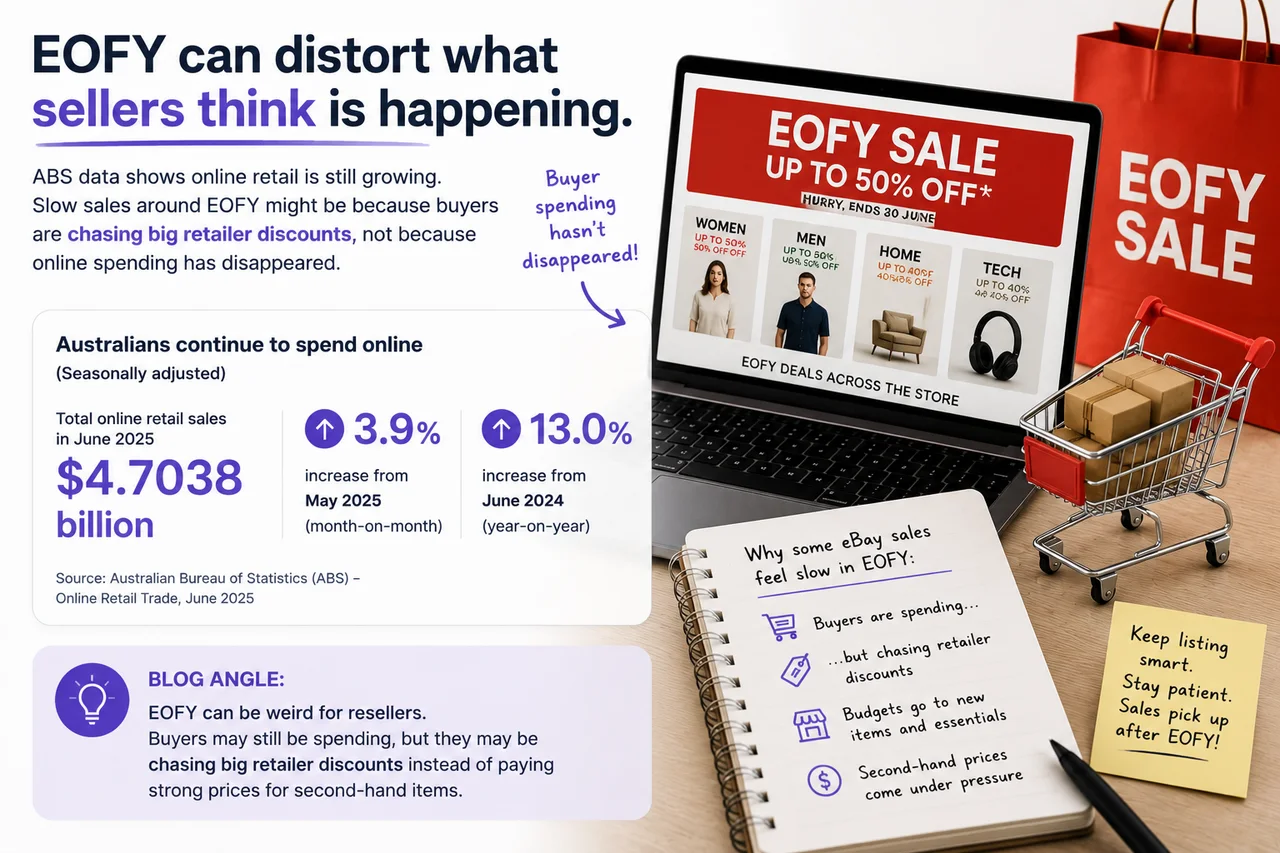
EOFY can feel strange for resellers.
Buyers may still be spending online, but they may be chasing big retailer discounts rather than paying strong prices for second-hand items. That can make good stock feel slow, especially in clothing, shoes, homewares and electronics.
The ABS Retail Trade, Australia, June 2025 release showed online retail turnover was still a meaningful part of total retail activity around the EOFY period. So if your store slows during a sale-heavy month, treat it as a signal to review price, postage and presentation, not proof that online buyers disappeared.
Good seller move:
- Hold firm on genuinely strong stock.
- Send sensible offers on watcher-heavy listings.
- Refresh weak listings with better photos or item specifics.
- Avoid racing every retailer sale to the bottom.
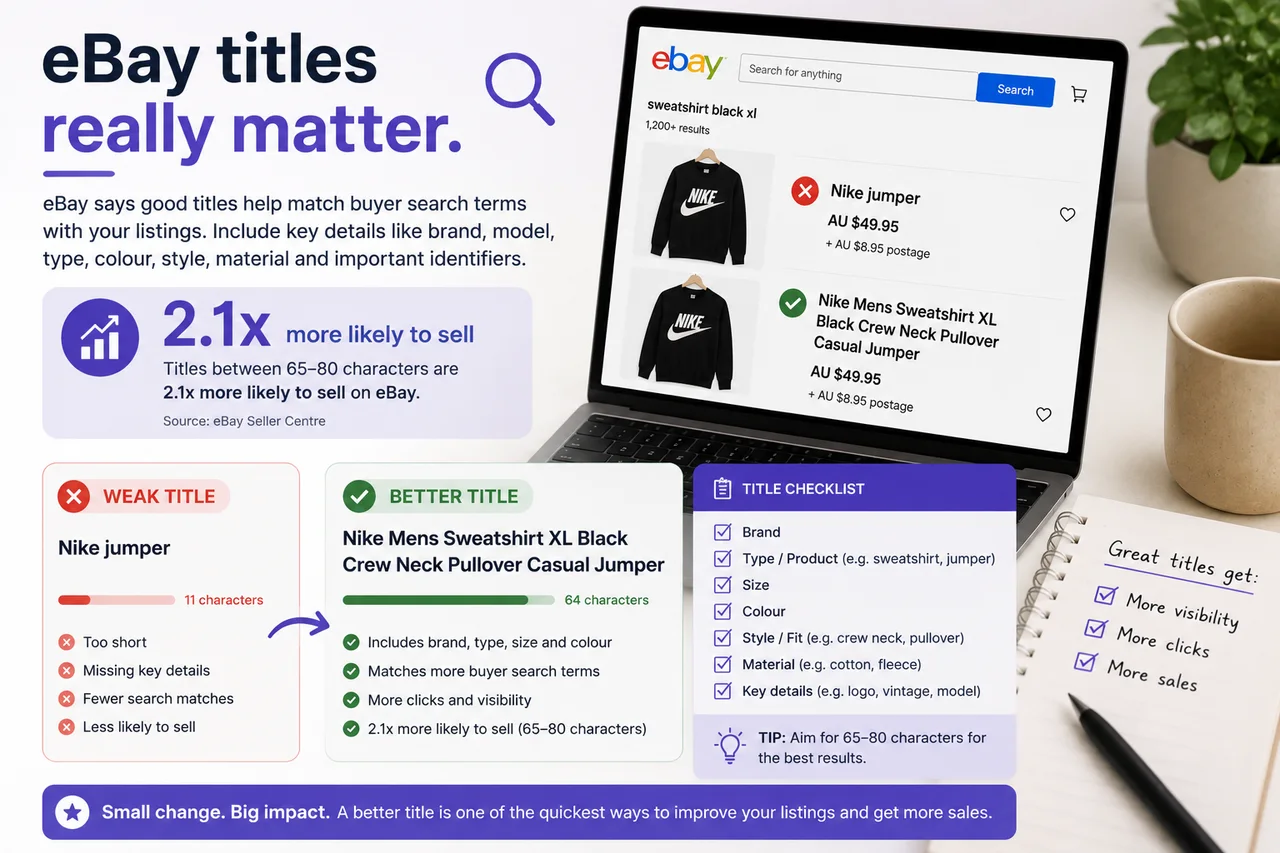
4. Your eBay title may not match buyer searches
The title is still one of the fastest fixes.
eBay’s own listing guidance encourages sellers to use clear, relevant details buyers search for. For clothing and resale stock, that usually means:
- Brand
- Product type
- Size
- Colour
- Style or fit
- Material where useful
- Model, line or key identifier where relevant
Weak title:
Nike jumper
Better title:
Nike Mens Sweatshirt XL Black Crew Neck Pullover Casual Jumper
The better title is not just longer. It gives eBay and the buyer more useful information.
Do not stuff the title with unrelated keywords. A title should match the item, not chase every possible search term. If you sell a Nike sweatshirt, use words that describe that sweatshirt. Do not add “Adidas”, “vintage” or “Y2K” unless they are genuinely relevant.
5. Your first photo may not be earning the click
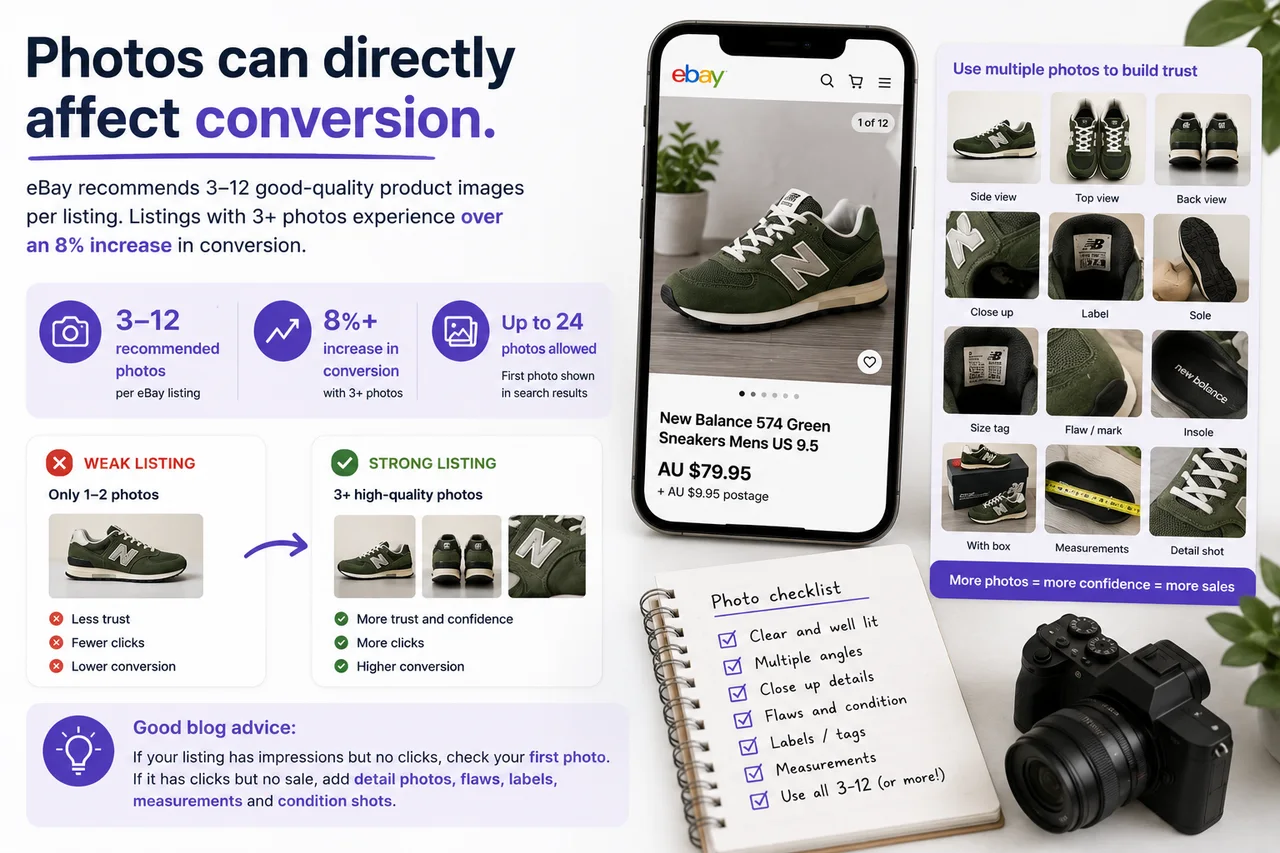
If your listing gets impressions but few clicks, check the first photo.
The first photo is the image buyers usually see in search results. It has to answer one question quickly: “What is this, and is it worth opening?”
A strong first photo is:
- Bright and clear
- Properly cropped
- Not cluttered
- Not too dark
- Showing the whole item
- Honest about shape, colour and condition
For clothing, avoid using the size tag, a close-up logo, a folded pile or a measurement photo as the first image. Those can be useful later, but the main photo should show the item clearly.
6. You may need more detail photos
If people click but do not watch or buy, they may not trust the listing yet.
eBay’s photo guidance recommends multiple clear product images, and for pre-owned resale stock, extra photos are not just cosmetic. They answer buyer questions before the buyer has to message you.
For most clothing, shoes and accessories, include:
- Front
- Back
- Brand label
- Size label
- Care/material label where useful
- Flaws or wear
- Measurements
- Sole or heel wear for shoes
- Close-up texture or detail shots
This is especially important for used items. A buyer is more likely to accept normal wear when they can see it before buying.
7. Missing item specifics can quietly kill visibility
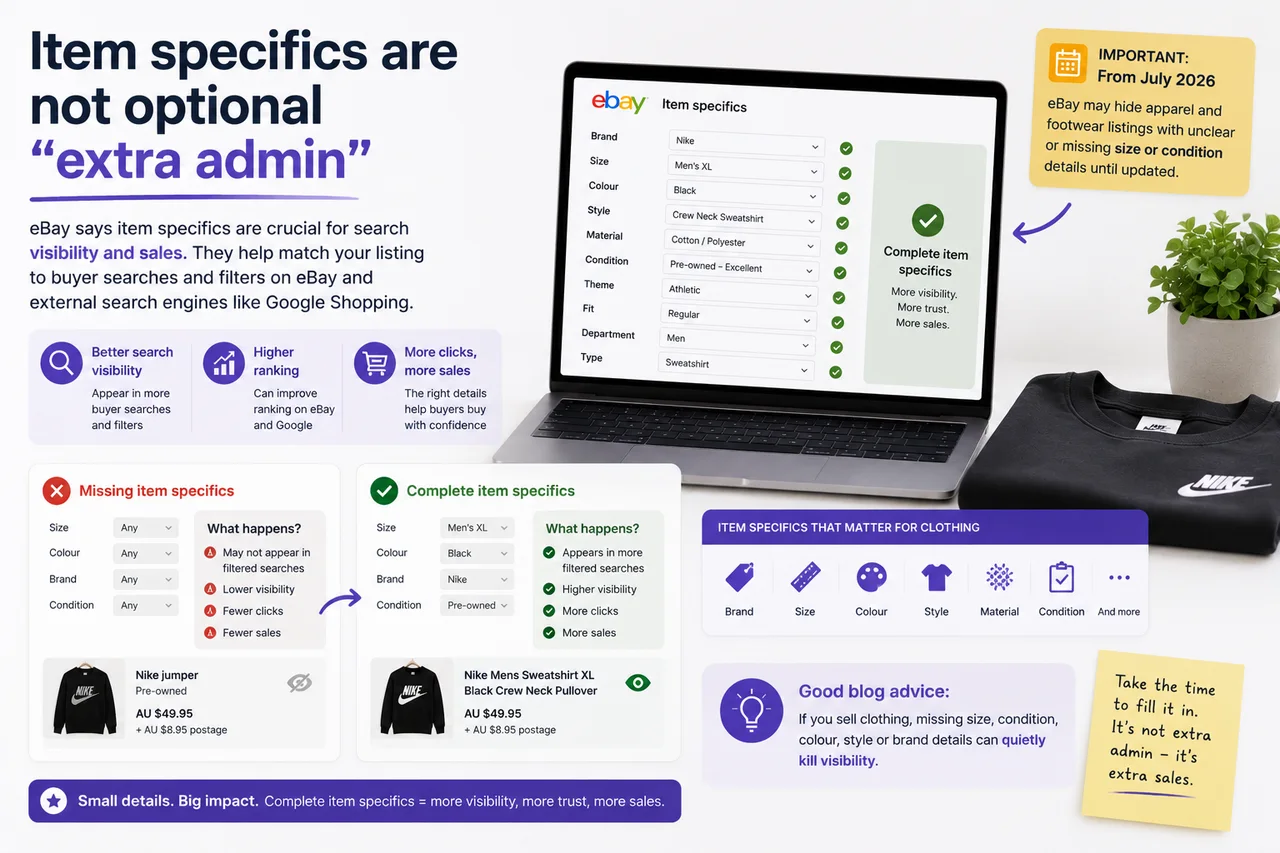
Item specifics are not just admin.
They help eBay understand what your item is, and they help buyers filter search results. If you skip size, brand, colour, condition, style or material, the item may miss searches it should have appeared in.
For clothing sellers, this is a big one.
At minimum, check:
- Brand
- Size
- Colour
- Department
- Type
- Style
- Condition
- Material
- Fit
- Pattern or theme if relevant
If you are selling clothing, also add measurements in the description. A tag size is not enough for many buyers, especially with vintage, international or pre-owned items.
Listalong has free AU size conversion charts and printable measurement guides if you want a consistent process for adding sizing details.
If you sell apparel or footwear, there is now a firm compliance reason to check those fields too. Our eBay Australia August 2026 clothing checklist explains the supported Size and Condition changes, the date discrepancy in eBay’s own help pages and the safest bulk-update process.
8. Postage may be making the item feel too expensive
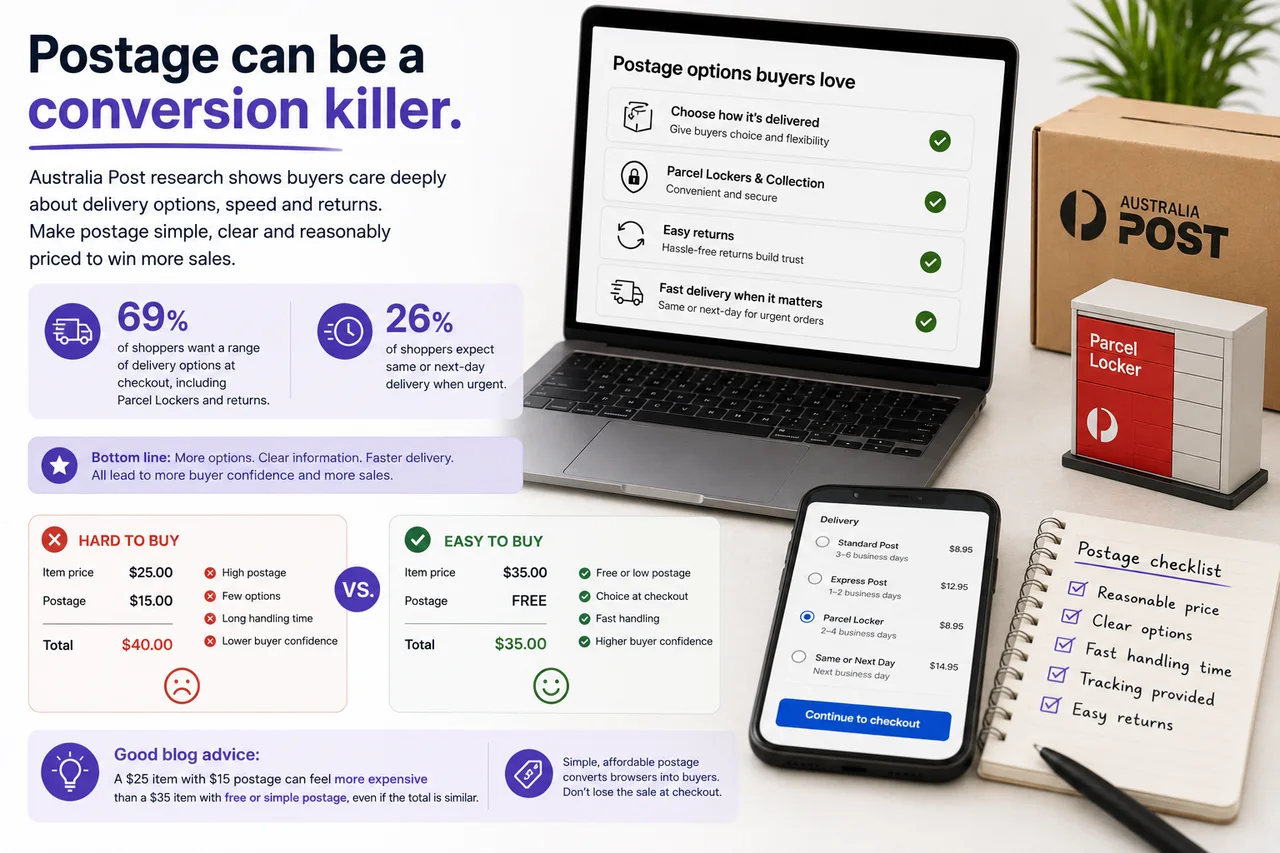
Postage can stop a buyer at the last second.
A $25 item with $15 postage can feel worse than a $35 item with simple or free postage, even if the total is similar. Buyers do not always calculate the total rationally. They react to friction.
Check whether your postage is:
- Higher than similar listings
- Too slow
- Unclear
- Missing tracking
- Missing useful delivery options
- Making a low-cost item feel expensive
Australia Post’s eCommerce reporting also shows shoppers care about delivery options and convenience. For eBay sellers, the practical takeaway is simple: make postage easy to understand and hard to object to.
If your item is small and light, check whether your packaging choice is pushing the postage cost up unnecessarily. If you use Australia Post often, our guide to own packaging versus flat-rate satchels may help.
9. Seller performance can affect buyer trust
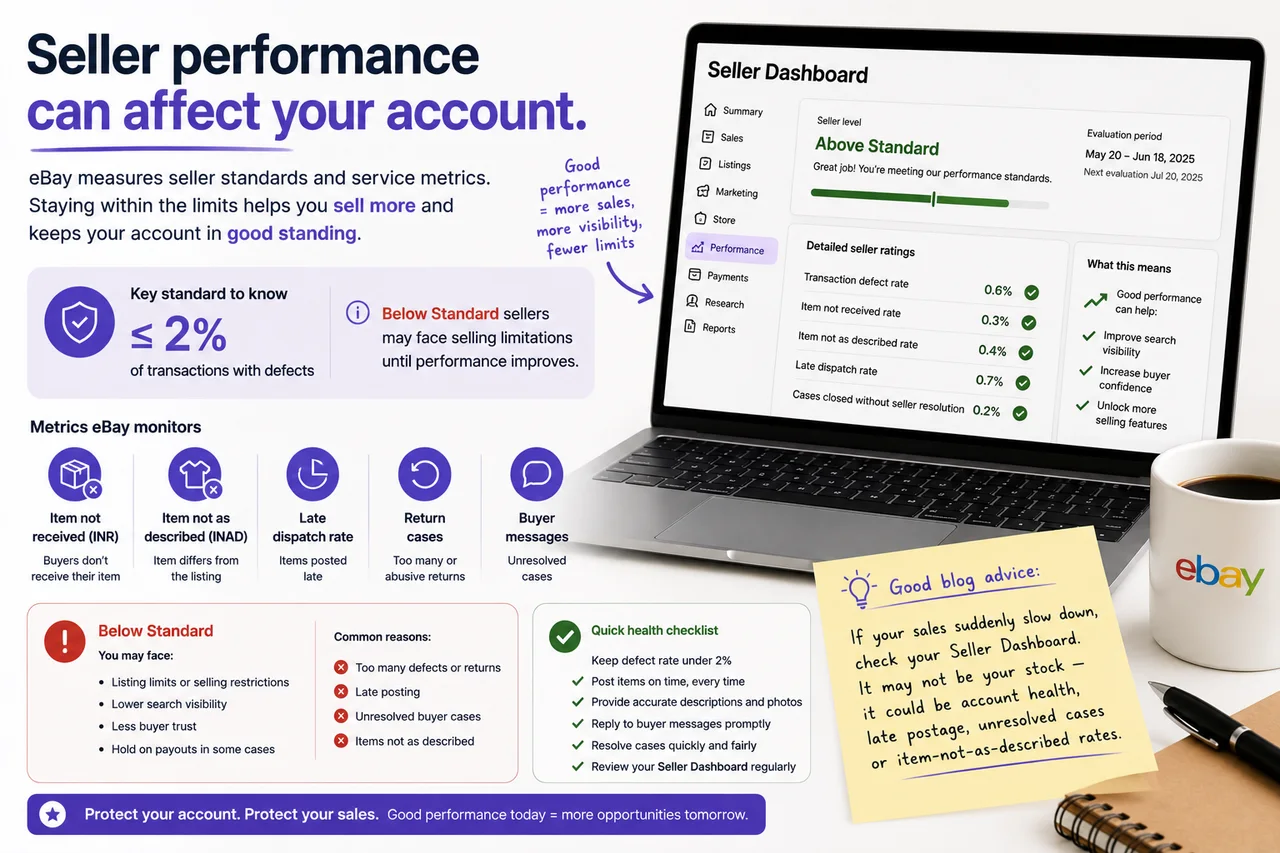
If your whole store slows suddenly, do not only look at your listings. Check your Seller Dashboard.
eBay measures seller standards and service metrics. Account issues can reduce buyer confidence and, in some cases, affect selling limits or visibility.
Check for:
- Late dispatch
- Item not received cases
- Item not as described cases
- Unresolved buyer messages
- Defects
- Return patterns
- Below Standard warnings
If you are below standard, fixing performance should come before tinkering with every listing. Better photos and titles help, but they cannot fully compensate for account health problems.
10. You may be guessing instead of using eBay’s data
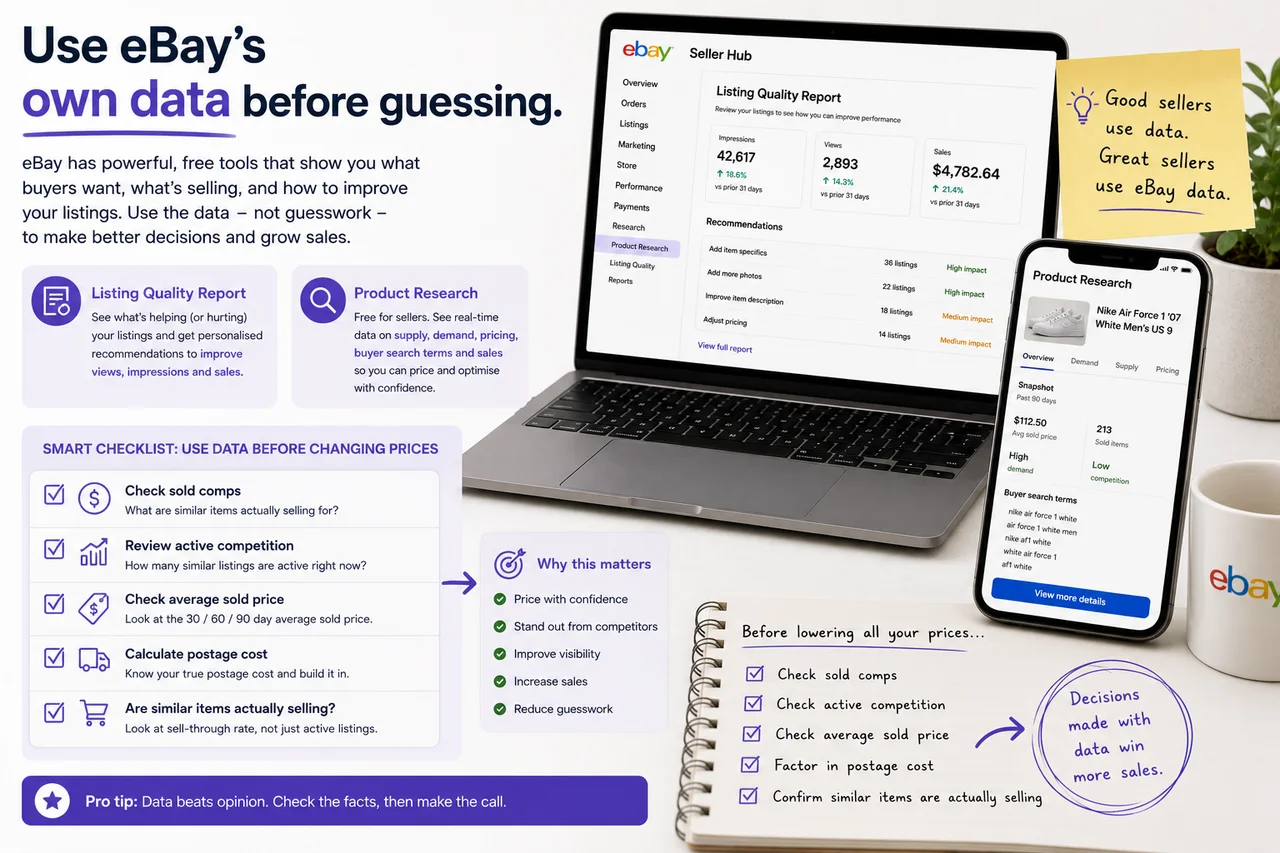
Before lowering prices, check the facts.
eBay gives sellers useful tools, including Product Research and the Listing Quality Report. These tools can help you understand supply, demand, search terms, impressions, views and listing recommendations.
If you are working from sold and active result totals, check the sold-to-active ratio before changing the price. The calculator uses only those two totals and shows the sample behind the percentage.
Our guide to the best tools to help boost eBay sales in Australia explains which tool fits low impressions, weak clicks, poor conversion, thin margin or a narrow audience.
Before changing a listing, check:
- Recent sold prices
- Active competition
- Average sold price over 30, 60 or 90 days
- Whether similar items are actually selling
- Search terms buyers use
- Whether your listing has impressions
- Whether it has clicks
- Whether it is missing item specifics or photos
Data keeps you from making emotional decisions.
If similar items are not selling, the problem may be demand. If similar items are selling but yours is not, the problem is probably your listing, price, photos, postage or seller trust.
11. Promoted Listings can help, but they are not magic
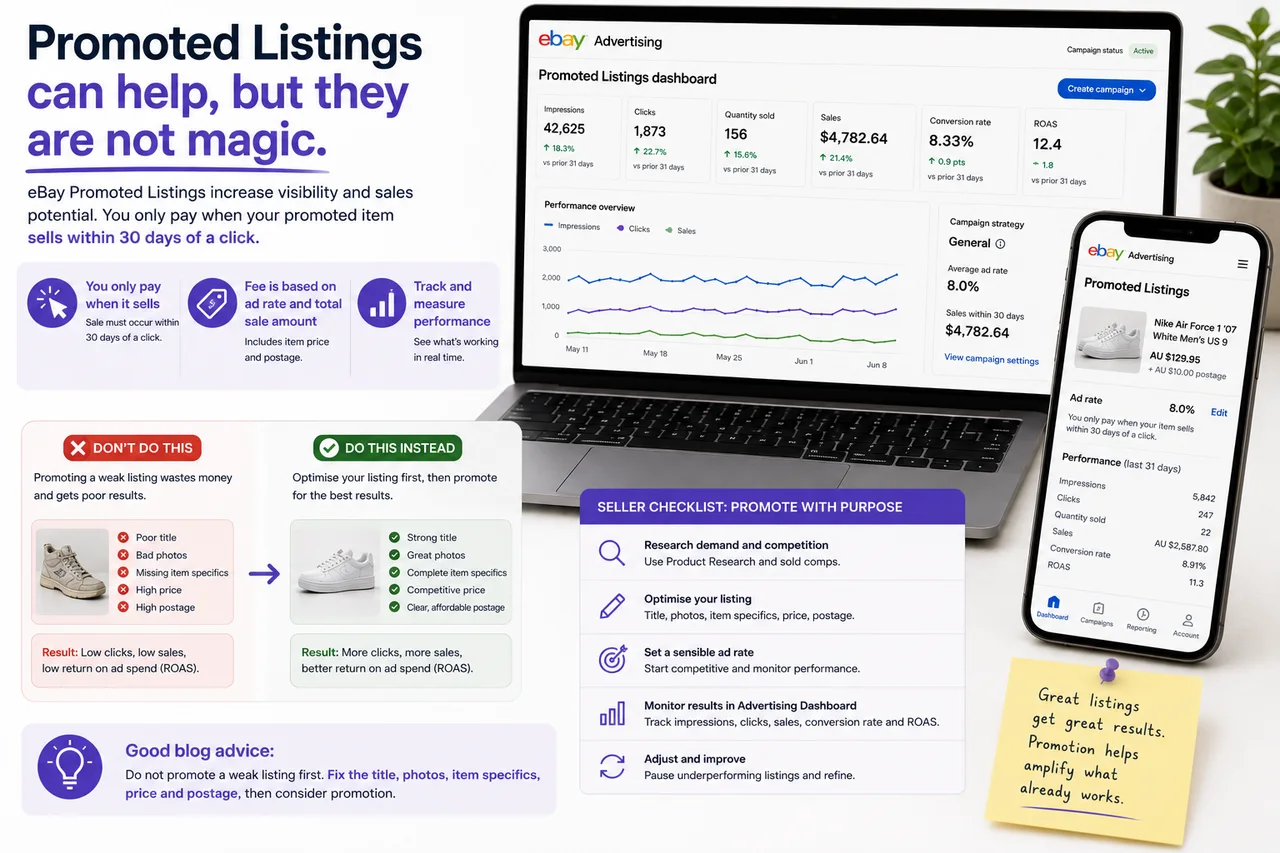
Promoted Listings can be useful when the listing is already strong.
They are less useful when the listing has a weak title, bad photos, missing item specifics, high postage or a price that is too far above the market. Promotion can amplify a good listing. It does not magically fix a bad one.
Before promoting, make sure:
- The title is clear
- The first photo is strong
- The item specifics are complete
- The price is competitive
- Postage is clear
- There is real demand for similar items
Then test a sensible ad rate and monitor the results. Watch impressions, clicks, sales, conversion rate and return on ad spend. If the listing gets more clicks but still no sale, the issue may be price, trust or product fit.
12. Some items may need a different audience
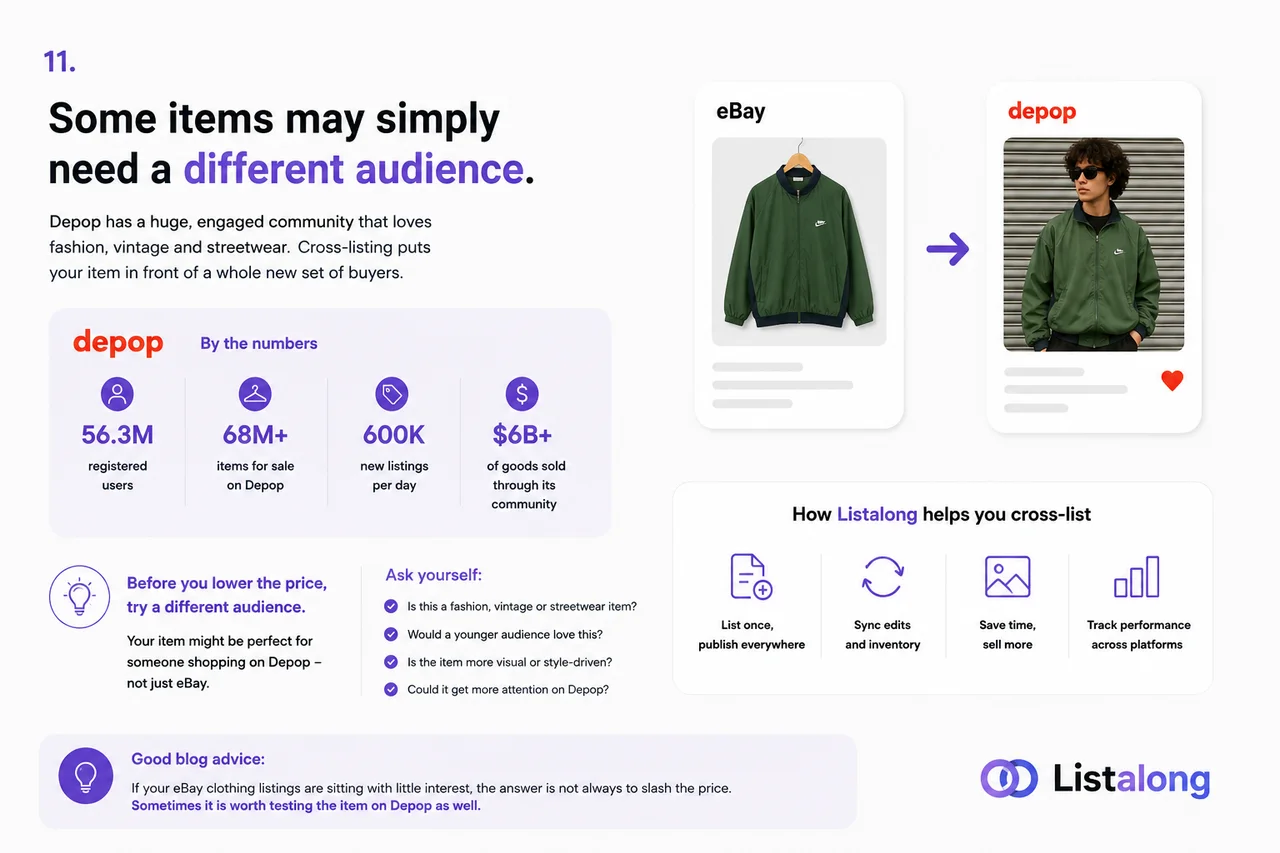
Sometimes the item is not wrong. The audience is.
This is especially true for fashion, vintage, streetwear, shoes and visual items. eBay is strong for search intent. Depop is more style-led. A buyer might not search eBay for your jacket, but they might find it while browsing Depop.
Before heavily discounting a fashion item, ask:
- Is it branded?
- Is it vintage, streetwear or style-led?
- Does it photograph well?
- Would a younger buyer like it?
- Is the item easier to sell through visuals than exact search terms?
- Could the same item appeal on eBay and Depop for different reasons?
If the answer is yes, cross-listing may be smarter than only dropping the price.
For a step-by-step setup, read how to start selling on Depop after eBay.
A practical slow-sales checklist
If you want a data-backed benchmark before using the checklist, read our original study of the most common mistakes found in 100 eBay Australia clothing listings.
Before you panic about slow eBay sales, check:
- Is the title clear and specific?
- Does the title include brand, item type, size, colour and key details?
- Is the first photo bright, clear and clickable?
- Do you have enough detail photos?
- Are flaws, labels, measurements and condition shown?
- Are item specifics complete?
- Is the item priced against sold listings, not just active listings?
- Is postage too high or confusing?
- Have you sent reasonable offers to watchers?
- Is your seller account Above Standard?
- Are similar items actually selling right now?
- Would the item suit Depop as well as eBay?
Where Listalong fits
Slow eBay sales do not always mean your item is bad.
Sometimes it needs better photos. Sometimes it needs better keywords. Sometimes the price or postage needs tightening. And sometimes the item simply needs another audience.
If you sell clothing or style-led stock on eBay or Depop, Listalong cross-lists existing listings to the other marketplace automatically or by selection. It is built for Australian resellers who want to list once, reach buyers on both marketplaces and reduce double-selling risk.
If a second marketplace fits your stock, see how eBay-to-Depop cross-listing works before setting it up. You can create a free Listalong account; the 14-day trial starts when both stores are connected. Cross-listing adds another sales channel, but cannot guarantee demand for an item.